
 Share on Facebook
 Share on Twitter
 Share on LinkedIn
 Share by Email
 Print
Print
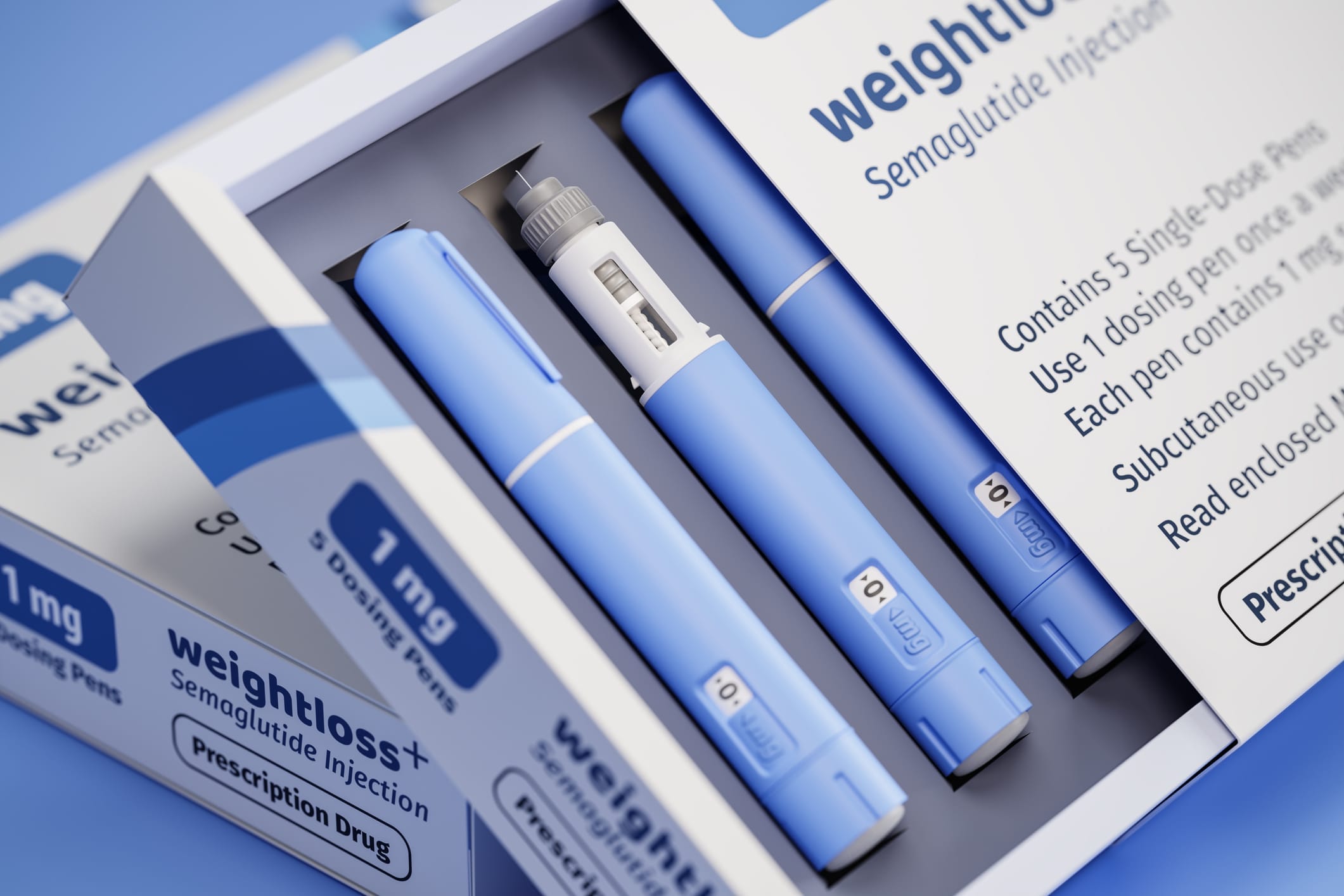
The popularization of anti-obesity drugs has affected nearly every medical specialty. With escalating use of these therapies to treat both type 2 diabetes mellitus (T2DM) and obesity, there has been a greater focus on understanding their benefits as well as potential complications.
Glucagon-like peptide-1 receptor agonists (GLP-1 RAs) represent a major advancement in anti-obesity treatment, though formulations of this class of drugs continue to evolve. The first FDA approved GLP-1 RA was exenatide in 2005, a hypoglycemic agent used in the treatment of T2DM.1 In 2017, Novo Nordisk introduced semaglutide (Ozempic), a long-acting GLP-1 RA used to improve glycemic control, and later approved in 2021 under the brand name Wegovy as an injection to promote weight loss in individuals with obesity and overweight.2,3
Trends derived from patient-record data between 2011 and 2023 reveal exponential increases in prescription patterns and use of GLP-1 RAs in the United States. A 2024 study published in the British Medical Journal found that, spanning a 12-year period, 871,854 patients were cumulatively prescribed a GLP-1 RA – from 27,367 between 2011 and 2014 to 679,265 between 2019 and 2023.4 This dramatic increase in GLP-1 RA use is likely due to a number of factors. Compared to other anti-obesity drugs, GLP-1 RAs have other demonstrable benefits — such as cardioprotective and renoprotective qualities — and fewer known side effects. Furthermore, weight loss associated with GLP-1 RA use is fast and effective compared to alternatives.5 However, as with most therapies, GLP-1 RAs are not without their downsides. A growing body of research has shown that GLP-1 RAs may be associated with adverse effects in both the eyes and other distant organ systems. As the popularization of this class of pharmaceuticals continues, specialists must stay aware of the known – and unknown – risks associated with their use.
GLP-1 RA Overview and Mechanism of Action
Glucagon-like peptide-1 (GLP-1) is a polypeptide secreted from the GI tract after food consumption. Following its release from enteroendocrine L cells in the ileum and colon, endogenous GLP-1 binds to GLP-1 receptors throughout the body.6 Receptors in the hypothalamus trigger satiety (i.e., to suppress appetite), whereas those in the pancreas lead to the endogenous secretion of insulin by pancreatic beta cells. As an incretin hormone, GLP-1s reduce blood glucose levels through insulin secretion, glucagon suppression, and slowed gastric emptying.7
These mechanisms allow for GLP-1 RAs to be used as both hypoglycemic agents in the treatment of T2DM and BMI-lowering agents. The evidence supporting the use of GLP-1 RAs for achieving improved markers of diabetes, obesity, and cardiovascular benefits are promising and still ongoing for various formulations.
Effects of GLP-1 RAs on Retinal Health
As of recently, a number of studies have been published examining the impact of GLP-1 RAs on retinal health. Although some findings have been mixed, most studies recommend that physicians consider the specific drug formulations and individual patients’ clinical characteristics before starting them on GLP-1 RA therapies. Several studies show that GLP-1 RA use may have beneficial effects on retinal health and even protect against the development of diabetic retinopathy (DR) and age-related ocular diseases.8,9 Additionally, clinical trials have shown that semaglutide use is associated with reductions in blood pressure, improved lipid levels, and decreased inflammation – all factors that play an important role in retinal health.1
On the contrary, a few studies have shown that GLP-1 RA use may be paradoxically associated with worsening retinal health and DR progression. Results of the SUSTAIN-6 trial (ClinicalTrials.gov Identifier: NCT01720446) published in 2016 were among the first to suggest that there may be microvascular complications associated with GLP-1 RA use.10 In that study, 3297 patients with T2DM were randomly assigned to standard-care regimens or once-weekly semaglutide (0.5 mg or 1.0 mg) injections for 104 weeks. While the rates of cardiovascular death, nonfatal myocardial infarction, or nonfatal stroke were significantly lower among patients receiving semaglutide, by the end of this study, another finding also emerged. Those taking semaglutide were found to be at a significantly greater risk of DR-related complications. Compared with a placebo, this cohort was at higher risk of developing vitreous hemorrhage, progressing to proliferative diabetic retinopathy (PDR), and requiring treatments such as retinal photocoagulation and intravitreal injections.10 These findings raised concerns about the safety profiles of GLP-1 RAs, prompting a number of follow-up studies.
Since the SUSTAIN-6 trial, similar studies have emerged supporting an association between GLP-1 RA use and worsening retinal microvascular health. A 2024 used data from the TriNetX database to compare outcomes in 6481 patients on either GLP-1 RAs or sodium-glucose cotransporter protein-2 (SGLT-2) inhibitors.11 Conversion to PDR was higher in the GLP-1 RA group at 1 and 3 years, along with high rates of DME at consistent time points up to 3 years.11 Similarly, a systematic review and meta-analysis of 60 randomized controlled trials with 60,077 patients showed that the incidence of vitreous hemorrhage was higher in patients with DR treated with GLP-1 RAs compared with placebo.12
Two large-scale population studies also suggested an increased risk of nonarteritic anterior ischemic optic neuropathy (NAION) among individuals with T2DM using semaglutide.13,14 A case series of 9 patients published around the same time reported similar associations, however a causal relationship between the GLP-1 RA drugs and NAION has yet to be proven.15
Despite evidence of worsening retinopathy and ocular complications associated with GLP-1 RA use, the mechanisms underlying these changes remain poorly understood. A few hypotheses have resulted, with the most popular involving the concept of “early worsening” — a phenomenon well-documented in those starting on treatment with insulin.16 This theory suggests that rapid corrections of blood glucose, a well-documented effect of GLP-1 RAs, may lead to microvascular damage. Given that the most extreme drops in blood glucose typically occur within the first two months of use, physicians have trended towards starting with low doses and slowly titrating up as needed.
Other hypotheses regarding mechanisms of microvascular damage include drug toxicity and unmasking pre-existing underlying retinopathy. The exact pathophysiology of GLP-1 RA-mediated microvascular damage is likely multifactorial; hence, future research should aim to elucidate the exact mechanisms at play.
Limitations of Ophthalmic Research Into GLP-1 RA Use
Although studies on the safety of GLP-1 RAs have been well designed and offer meaningful insight, they should be interpreted with caution. Many of these studies have limitations that may impact their generalizability and clinical significance. While several editorials have expressed concern regarding the disproportionate reporting of retinal adverse events associated with GLP-1 RA use in specific studies, there remain a number of broad limitations.
First, GLP-1 RAs are a novel hypoglycemic agent, popularized primarily within the past decade. Given their recent introduction, there is a paucity of longitudinal data or secondary endpoints for many studies. Without sufficient follow-up data, it will be difficult to answer a number of questions: are there actually beneficial or adverse longitudinal effects? Could early worsening overshadow later stabilization? Within the next decades, continuing to document observations and conduct clinical trials will be essential to determine whether there are longitudinal adverse effects.
Second, generalizability is limited by the patient demographics examined in many of these studies. Risk stratification for adverse effects associated with GLP-1 RAs is likely very complex and dependent on several factors, including age, DR staging at the time of initiation, existing comorbidities, lifestyle factors, and concurrent use of other hypoglycemic agents. For example, a randomized trial published in 2021 shows that patients older than 60 years of age who had a diabetes duration of 10+ years were at higher risk of DR progression specifically when using semaglutide.17 These results suggest that it may be too early to make broad, overarching generalizations about GLP-1 RA use without properly exploring the interplay between these variables and GLP-1–associated risks.
Last, studies have not yet quantitatively assessed retinal microvascular changes in those on GLP-1 RA therapy using imaging modalities such as optical coherence tomography (OCT) or optical coherence tomography angiography (OCT-A). This limits the ability to measure objective indicators of retinal health such as areas of nonperfusion or vascular metrics such as perfusion density and vessel density.
Given that most studies to date rely on clinical endpoints such as vitreous hemorrhage or the need for additional treatment such as intravitreal injections or retinal photocoagulation, subclinical changes may not be captured. Correlating quantitative metrics with clinical and patient-reported metrics will be essential to understanding the true adverse effects of GLP-1 RA use — if any.
Future Directions for Research and Clinical Implications
The ocular safety profile of GLP-1 RAs remains uncertain until researchers can gather more robust, longitudinal, and quantifiable data. Moving forward, research investigators exploring this drug class should carefully choose and specify microvascular endpoints that can help discern the effects of GLP-1 RAs on the eye. Generally, the advantages of using these hypoglycemic therapies outweigh the potential adverse effects — especially since achieving glycemic control can prevent vision-threatening complications.
However, the current body of literature suggests that ophthalmologists should still be vigilant about conducting a baseline retinal evaluation on patients prior to them starting a GLP-1 RA, as well as regularly monitoring their eyes. This applies even more to populations at higher-relative risk such as the elderly, those with pre-existing PDR or prolonged DM, individuals on multiple medications for their diabetes, and those who experience rapid reductions in either body weight or blood glucose.
This article originally appeared on Ophthalmology Advisor
References:
- Zheng Z, Zong Y, Ma Y, et al. Glucagon-like peptide-1 receptor: mechanisms and advances in therapy. Sig Transduct Target Ther. 2024;9(1):1-29. doi:10.1038/s41392-024-01931-z
- Commissioner O of the. FDA Approves New Drug Treatment for Chronic Weight Management, First Since 2014. FDA. June 21, 2021. Accessed April 14, 2025. https://www.fda.gov/news-events/press-announcements/fda-approves-new-drug-treatment-chronic-weight-management-first-2014
- Kommu S, Whitfield P. Semaglutide. In: StatPearls. StatPearls Publishing; 2024. Accessed December 4, 2024. http://www.ncbi.nlm.nih.gov/books/NBK603723/
- Mahase E. GLP-1 agonists: US sees 700% increase over four years in number of patients without diabetes starting treatment. Published online July 23, 2024. doi:10.1136/bmj.q1645
- Zhong X, Zhang T, Liu Y, et al. Effects of three injectable antidiabetic agents on glycaemic control, weight change and drop-out in type 2 diabetes suboptimally controlled with metformin and/or a sulfonylurea: A network meta-analysis. Diabetes Research and Clinical Practice. 2015;109(3):451-460. doi:10.1016/j.diabres.2015.05.048
- D’Alessio D. Is GLP‐1 a hormone: Whether and When? J Diabetes Investig. 2016;7(Suppl 1):50-55. doi:10.1111/jdi.12466
- Malik J, Roohi N. GLP-1, a powerful physiological incretin: an update. J Biol Regul Homeost Agents. 2018;32(5):1171-1176.
- Zheng D, Li N, Hou R, et al. Glucagon-like peptide-1 receptor agonists and diabetic retinopathy: nationwide cohort and Mendelian randomization studies. BMC Med. 2023;21:40. doi:10.1186/s12916-023-02753-6
- Allan KC, Joo JH, Kim S, et al. Glucagon-like peptide-1 receptor agonist impact on chronic ocular disease including age-related macular degeneration. Ophthalmol. Published online January 23, 2025. doi:10.1016/j.ophtha.2025.01.016
- Marso SP, Bain SC, Consoli A, et al. Semaglutide and cardiovascular outcomes in patients with type 2 diabetes. New England Journal of Medicine. 2016;375(19):1834-1844. doi:10.1056/NEJMoa1607141
- Wai KM, Mishra K, Koo E, et al. Impact of GLP-1 Agonists and SGLT-2 Inhibitors on Diabetic Retinopathy Progression: An Aggregated Electronic Health Record Data Study. Am J Ophthalmol. 2024;265:39-47. doi:10.1016/j.ajo.2024.04.010
- Avgerinos I, Karagiannis T, Malandris K, et al. Glucagon-like peptide-1 receptor agonists and microvascular outcomes in type 2 diabetes: A systematic review and meta-analysis. Diabetes Obes Metab. 2019;21(1):188-193. doi:10.1111/dom.13484
- Cai CX, Hribar M, Baxter S, et al. Semaglutide and nonarteritic anterior ischemic optic neuropathy. JAMA Ophthalmol. Published online February 20, 2025. doi:10.1001/jamaophthalmol.2024.6555
- Hathaway JT, Shah MP, Hathaway DB, et al. Risk of nonarteritic anterior ischemic optic neuropathy in patients prescribed semaglutide. JAMA Ophthalmol. 2024;142(8):732-739. doi:10.1001/jamaophthalmol.2024.2296
- Katz BJ, Lee MS, Lincoff NS, et al. Ophthalmic complications associated with the antidiabetic drugs semaglutide and tirzepatide. JAMA Ophthalmol. 2025;143(3):215-220. doi:10.1001/jamaophthalmol.2024.6058
- Bain SC, Klufas MA, Ho A, Matthews DR. Worsening of diabetic retinopathy with rapid improvement in systemic glucose control: A review. Diabetes Obes Metab. 2019;21(3):454-466. doi:10.1111/dom.13538
- Wang F, Mao Y, Wang H, Liu Y, Huang P. Semaglutide and diabetic retinopathy risk in patients with type 2 diabetes mellitus: a meta–analysis of randomized controlled trials. Clin Drug Investig. 2022;42(1):17-28. doi:10.1007/s40261-021-01110-w


