
 Share on Facebook
 Share on Twitter
 Share on LinkedIn
 Share by Email
 Print
Print

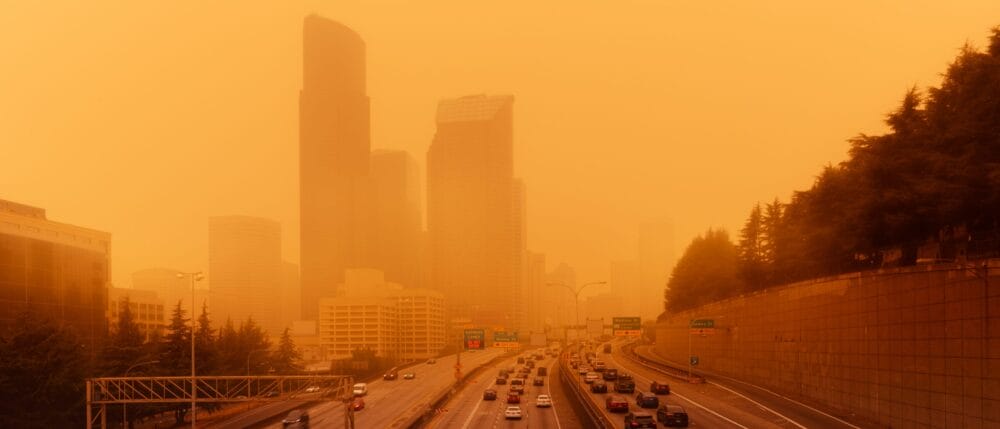
Exposure to air pollution, especially particulate matter less than 2.5 µm in diameter (PM2.5), has been linked to an increased risk for a wide range of adverse health effects, including respiratory disease, cardiovascular and cerebrovascular disease, and cancer.1,2 In addition, accumulating research points to a connection between air pollution exposure and an increased risk for neurodegenerative diseases, including dementia.3
“There are now a growing number of studies from around the world, using different data sources and different methods, that suggest that long-term exposure to air pollution increases the risk for dementia, as well as other chronic diseases,” according to Kenneth M. Langa, MD, PhD, the Cyrus Sturgis Professor of Medicine in the department of internal medicine at the University of Michigan Medical School in Ann Arbor and research scientist at the VA Center for Clinical Management Research.
In addition to epidemiologic studies linking higher long-term air pollution concentrations to “cognitive decline, incident dementia, and dementia-related morphologic changes on neuroimaging, animal studies have also demonstrated that pollution exposure induces chronic inflammation and neurodegeneration in various brain regions,” explained physician scientist Coralynn Sack, MD, MPH, assistant professor in the department of environmental and occupational health sciences at the University of Washington School of Public Health in Seattle. “Either by causing direct neurotoxicity, or through other pollutant-mediated pathways — such as oxidative stress, systemic inflammation, or autonomic nervous system dysfunction — pollutants may contribute to symptomatic disease in the brain.”
Mounting Evidence
A comprehensive umbrella review of 284 studies, published by World Psychiatry in 2024, explored the impact of pollution and climate change on mental health. Among the findings: a higher incidence of dementia is associated with long-term exposure to specific pollutants, most notably carbon monoxide (odds ratio [OR], 1.587), solvents (eg, toluene, acetone, xylene, hexane, heptane, and ethyl acetate; OR, 1.139), and nitrogen oxides (HR, 1.004).4
Other studies have focused more specifically on PM2.5. In a study published in October 2023 in JAMA Internal Medicine, Dr Langa and colleagues examined associations between residential exposure to 9 different sources of PM2.5 and rates of incident dementia in 27,857 older adults (mean age, 61 years; 56.5% female). Over a median follow-up period of 10.2 years, 15% of participants developed dementia.5
The results demonstrated associations between greater concentrations of total residential PM2.5 and higher rates of incident dementia, with the strongest associations observed for exposure to PM2.5 from agriculture exposures (hazard ratio [HR], 1.13; 95% CI, 1.01-1.27) and wildfires (HR, 1.05; 95% CI, 1.02-1.08).5
“This work uniquely highlights the importance of pollution from agriculture, likely due to their use of neurotoxic chemicals in pesticides, as well as wildfires — with their uncontrolled emissions — on the brain,” said first author Boya Zhang, PhD, a doctoral student at the University of Michigan School of Public Health in Ann Arbor.
In research reported in 2022, Semmens et al investigated associations between PM2.5 exposure and incident dementia among 2564 participants from the Ginkgo Evaluation of Memory Study (mean age, 78 years; 54% male; 97% White), with adjudication of dementia diagnoses and types performed by a panel of neurologists.6
Over a mean follow-up of 5.7 years, 12.6% of participants developed dementia. Analyses revealed that an interquartile range (IQR) increase in 20-year PM2.5 exposure was linked to a 20% increase in dementia risk (HR, 1.20; 95% CI, 1.05-1.37) and an increased risk for mixed vascular dementia and Alzheimer’s disease.6
In a US cohort study published in 2022 in PNAS, an IQR increase in PM2.5 exposure was associated with a 6% to 7% increase in the incidence of dementia and a 9% increase in the incidence of Alzheimer’s disease among older adults between 2010 and 2017. Regarding specific PM2.5 constituents, the strongest associations were observed for particles derived from traffic and fossil fuel sources, including black carbon and sulfate.7
A recent meta-analysis of 17 studies with a combined total of 91,391,296 participants found a 3% increase in dementia risk per 1 μg/m3 increment in PM2.5 (HR, 1.03; 95% CI, 1.02–1.05). However, the authors noted high heterogeneity across the relatively small number of studies available on the topic.8
A 2022 study showed a 2.15% increase in dementia risk with a 1 µg/m3 increase in decadal PM2.5, with stronger effects observed among women, older adults, and individuals with a greater number of clinical risk factors for dementia.9
In a 2021 cohort study of 7066 participants (median age, 73.4 years; 62% women) in France with a median follow-up of 10 years, each 5 µg/m3 PM2.5 increase was associated with a higher risk for all-cause dementia (HR, 1.20; 95% CI, 1.08–1.32), Alzheimer’s disease (HR, 1.20; 95% CI, 1.09–1.32), and vascular dementia (HR, 1.33; 95% CI, 1.05–1.68).10
Conversely, a 2022 study of older women in the US showed a 20% reduction in dementia risk with each IQR increment of improved air quality in terms of PM2.5 levels (HR, 0.80 per 1.78 μg/m3; 95% CI, 0.71–0.91). “These findings strengthen the causal association between late-life exposure to air pollution and dementia risk,” the authors wrote.11
Mitigating Risk
Experts recommend a range of potential measures that patients can take to reduce their risk for adverse health effects from air pollution exposure.
Personal Measures
Dr Zhang said his study suggests that people “need to take wildfire smoke events more seriously and alter our behaviors during high pollution days — for example, exercising indoors, keeping windows closed, and potentially wearing masks outside on high pollution days.” He also advised that those who live in areas “surrounded by agricultural activities and frequent impacts of wildfire smoke might consider installing air purifiers in their homes or being more vigilant about replacing their HVAC system’s filters.”
Other personal interventions that a provider could recommend to patients include monitoring the local air forecast and changing activities to reduce time spent in highly polluted areas, according to Dr Sack.12 “For many of these interventions, such as recommending that patients avoid exercising outdoors when air quality is poor, it is important to balance the risk of pollution exposure with the benefits of exercising to brain health,” she noted.
Broader Measures
Beyond individual efforts to mitigate the risks associated with air pollution exposure, there is a critical need for broader measures to achieve the ultimate goal: better air quality. “I think there is growing evidence that policy and public health efforts that reduce pollution levels that we are exposed to every day will have long-term health benefits, including a decrease in dementia risk,” Dr Langa stated.
Dr Zhang said her recent study with Dr Langa and colleagues adds more evidence in support of strengthening National Ambient Air Quality Standards regarding particulate matter air pollution to protect health.5 “Selectively targeting certain sources of pollution for policy interventions might be an effective strategy to reduce the burden of dementia, though more research is needed to confirm our findings,” she suggested. “Also, the importance of wildfire smoke in our study adds one more reason to take action and pursue solutions to minimize additional climate change.”
Dr Sack emphasized the key role of laws and regulations in achieving log-lasting reductions in harmful emissions: “Climate change policies aimed at reducing CO2 have the co-benefits of reducing fossil fuel consumption and production of toxic air pollutants, while the promotion of alternative energy sources and green building technologies can also lead to cleaner air,” she explained. “More locally, urban design should be used to promote separation of key community resources from high-traffic areas or other sources of pollution, and this should be done intentionally and with the goal of reducing the impact of environmental injustice.”
She cited the need for further research to elucidate the effects of air pollution exposure in the brain, as well as the need for research investigating whether personal interventions to reduce pollution exposure are effective in reducing the risk for dementia.
This article originally appeared on Pulmonology Advisor
References:
- National Institute of Environmental Health Sciences. Air pollution and your health. Accessed February 3, 2025.
- Kulick ER, Kaufman JD, Sack C. Ambient air pollution and stroke: an updated review. Stroke. 2023;54(3):882-893. doi:10.1161/STROKEAHA.122.035498
- Peters A. Ambient air pollution and Alzheimer’s disease: the role of the composition of fine particles. Proc Natl Acad Sci U S A. 2023;120(3):e2220028120. doi:10.1073/pnas.2220028120
- Radua J, De Prisco M, Oliva V, Fico G, Vieta E, Fusar-Poli P. Impact of air pollution and climate change on mental health outcomes: an umbrella review of global evidence. World Psychiatry. 2024;23(2):244-256. doi:10.1002/wps.21219
- Zhang B, Weuve J, Langa KM, et al. Comparison of particulate air pollution from different emission sources and incident dementia in the US. JAMA Intern Med. 2023;183(10):1080-1089. doi:10.1001/jamainternmed.2023.3300
- Semmens EO, Leary CS, Fitzpatrick AL, et al. Air pollution and dementia in older adults in the Ginkgo Evaluation of Memory Study. Alzheimers Dement. 2023;19(2):549-559. doi:10.1002/alz.12654
- Shi L, Zhu Q, Wang Y, et al. Incident dementia and long-term exposure to constituents of fine particle air pollution: a national cohort study in the United States. Proc Natl Acad Sci U S A. 2023;120(1):e2211282119. doi:10.1073/pnas.2211282119
- Abolhasani E, Hachinski V, Ghazaleh N, Azarpazhooh MR, Mokhber N, Martin J. Air pollution and incidence of dementia: a systematic review and meta-analysis. Neurology. 2023;100(2):e242-e254. doi:10.1212/WNL.0000000000201419
- Bishop KC, Ketcham JD, Kuminoff NV. Hazed and confused: the effect of air pollution on dementia. Rev Econ Stud. 2023;90(5):2188-2214. doi:10.1093/restud/rdac078
- Mortamais M, Gutierrez LA, de Hoogh K, et al. Long-term exposure to ambient air pollution and risk of dementia: results of the prospective Three-City Study. Environ Int. 2021;148:106376. doi:10.1016/j.envint.2020.106376
- Wang X, Younan D, Millstein J, et al. Association of improved air quality with lower dementia risk in older women. Proc Natl Acad Sci U S A. 2022;119(2):e2107833119. doi:10.1073/pnas.2107833119
- US Environmental Protection Agency. Air quality guide for particle pollution. Published February 2023. Accessed February 3, 2025.


