
 Share on Facebook
 Share on Twitter
 Share on LinkedIn
 Share by Email
 Print
Print
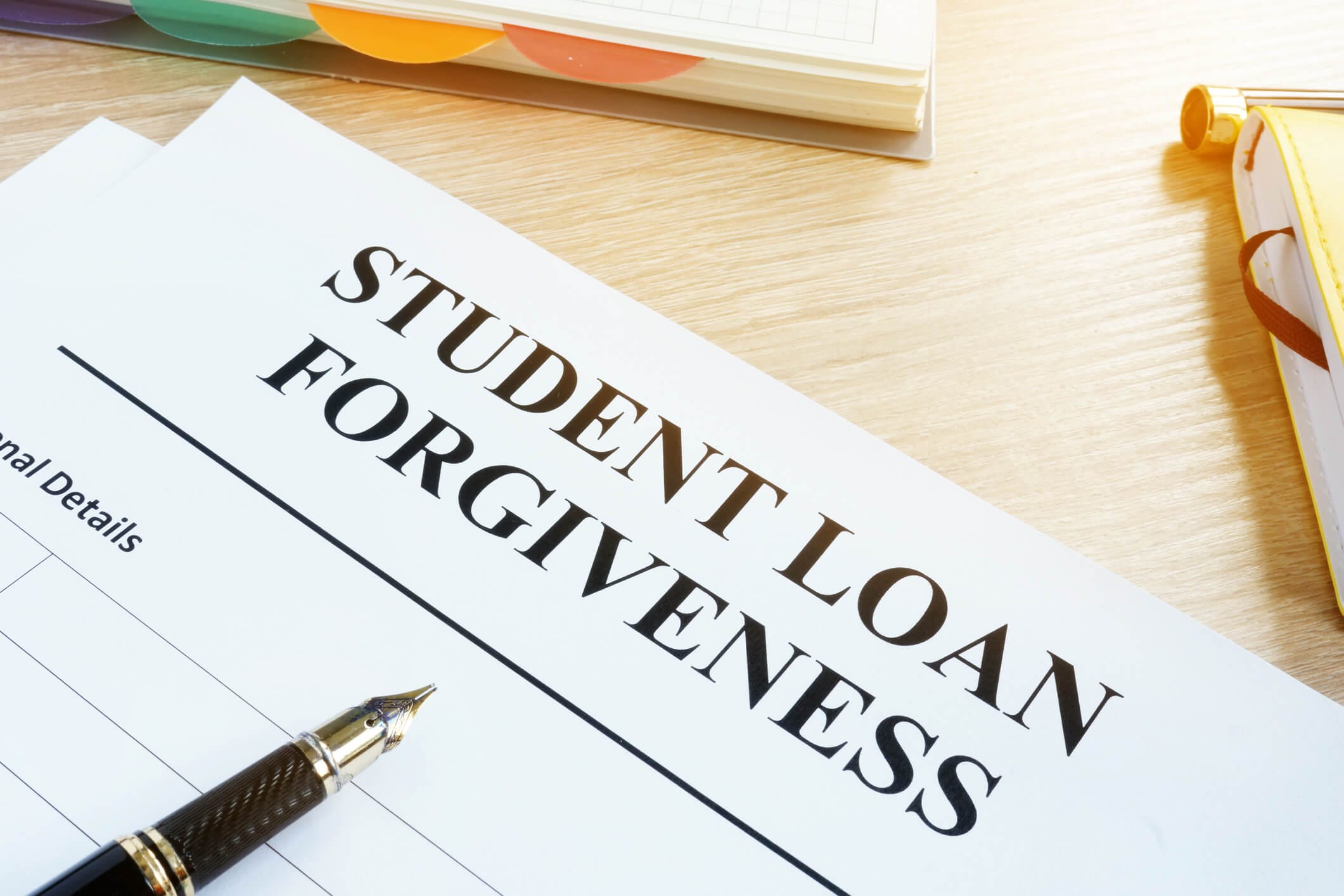
President Joe Biden’s plans for student debt forgiveness may provide some relief for medical school graduates, as long as those plans survive legal challenges. In the meantime, physicians can take advantage of a range of existing loan forgiveness and repayment options.
On July 18, the Biden administration approved the cancellation of roughly $1.2 billion in student loan debt for 35,000 Americans working in public service.1,2 This debt relief is a result of changes to the Public Service Loan Forgiveness (PSLF) program, and it brings the total loan forgiveness approved by the Biden administration to $168.5 billion.
In May, the administration had announced that the Department of Education (DOE) would be canceling student debt for 160,000 Americans who are enrolled in the Saving on a Valuable Education (SAVE) plan, are public service workers, or were approved for student debt relief via changes made to income-driven repayment plans.3
In April, the president announced a plan that would deliver student debt relief to more than 30 million Americans, when combined with other actions the administration has taken.4,5 This plan was designed to tackle debt in a few ways. One part of the plan is canceling “runaway interest.” It would cancel up to $20,000 of the amount a borrower’s balance has grown over time due to unpaid interest on their loans, regardless of their income.
However, low- and middle-income borrowers enrolled in the SAVE plan or another income-driven repayment plan would be eligible to have all of their interest canceled. This includes single borrowers earning $120,000 or less annually and married borrowers earning $240,000 or less annually.
The president’s plan would automatically cancel debt for people who are eligible for loan forgiveness through the SAVE plan, the PSLF program, and other forgiveness programs who have not applied for debt forgiveness via these programs.
The president’s plan would also cancel debt for:
- Borrowers who entered repayment more than 20 years ago
- Borrowers experiencing hardships that prevent them from repaying their loans
- Borrowers whose schools lost their eligibility to participate in the federal student aid program or were denied recertification because they cheated or took advantage of students
- Borrowers whose schools closed and “failed to provide sufficient value.”
Legal Challenges
The president’s attempts at student debt relief have been plagued by legal challenges. In August 2022, President Biden had announced a plan to cancel some student loan debt for low- to middle-income borrowers.6 However, in June 2023, the US Supreme Court ruled that the president did not have the authority to implement that plan.7
Now, the SAVE plan is being challenged as well.8-10 Last month, a federal judge in Missouri prevented the DOE from forgiving any more loans under the SAVE plan until he decided the full case, and a federal judge in Kansas prevented the DOE from implementing a part of the SAVE plan that would lower borrowers’ monthly payments from 10% of their discretionary income to 5%.8
On June 30, the 10th US Circuit Court of Appeals put a hold on the injunction issued by the Kansas judge, which allowed the monthly payments to be lowered.9 However, on July 18, the 8th US Circuit Court of Appeals prevented the Biden administration from implementing those parts of the SAVE plan that have not already been blocked by a lower-court judge.10
While this case works its way through the legal system, borrowers enrolled in the SAVE plan will be placed into interest-free forbearance, according to Education Secretary Miguel Cardona.11
Current Loan Forgiveness Options for Physicians
While Americans wait to see if President Biden’s plans for student debt forgiveness will take effect, physicians seeking student debt relief can look into the options outlined below.
PSLF Program
Physicians employed by a government or not-for-profit organization may be eligible for the PSLF program.12 This program forgives the remaining balance on a borrower’s federal student loans after they have made the equivalent of 120 qualifying monthly payments under an accepted repayment plan and if they work full-time for an eligible employer.
The PSLF Help Tool can help borrowers determine whether their employer is eligible for the PSLF program or request that their employer’s eligibility be reviewed if the employer is not already in the PSLF database.
National Health Service Corps Loan Repayment Program
The National Health Service Corps (NHSC) loan repayment program is available for primary care providers working in an underserved community that has a shortage of health care professionals.13
At present, the program offers up to $75,000 of loan repayment in exchange for 2 years of full-time service in an area of shortage and up to $37,500 for 2 years of part-time service. Physicians may be eligible to extend this contract beyond 2 years as well. For fiscal year 2024, eligible physicians can receive up to $20,000 for an additional year of service.14
Indian Health Service Loan Repayment Program
Physicians who serve American Indian or Alaska Native communities with the greatest staffing needs are eligible to apply for the Indian Health Service loan repayment program.15 The program offers up to $50,000 in exchange for a 2-year service commitment, and physicians may be able to extend their contracts each year until their student loan debt is paid.
State Loan Repayment Program
The State Loan Repayment Program provides grants to states and territories that they can use to run their own loan repayment programs.16 Physicians can search the National Health Service Corps website for information on programs in their state.
Income-Driven Repayment Plans
The government offers 4 income-driven repayment plans:
- SAVE plan (currently paused, pending court cases)
- Pay As You Earn (PAYE) repayment plan
- Income-Based Repayment (IBR) plan
- Income-Contingent Repayment (ICR) plan.17
Under these plans, borrowers’ monthly payments are adjusted based on their discretionary income. However, the government will forgive any remaining loan balance if the borrower’s loans aren’t fully repaid at the end of the repayment period, which is typically 20 years or 25 years.
Loan Forgiveness Due to Disability
Borrowers can have certain student loans forgiven if they become disabled and have documentation from the Department of Veterans Affairs, the Social Security Administration, or an authorized medical professional.18
In order to discharge federal student loans, a person must be totally and permanently disabled. They must be “unable to engage in any substantial gainful activity,” which is often referred to as an “any occupation” definition of disability.
An “any occupation” definition differs from the “own occupation” definition, in which “disabled” would refer to being unable to “perform the material and substantial duties” of one’s own specialty, even if the person can work in another capacity.19 Federal student loans may be forgiven only if the disabled person is unable to work in any type of occupation at all.18
This article originally appeared on Cancer Therapy Advisor
References:
- Statement from President Joe Biden on $1.2 billion in student debt cancellation for 35,000 borrowers. News release. White House. Published July 18, 2024. Accessed July 19, 2024.
- Biden-Harris administration approves additional $1.2 billion in student debt relief for 35,000 public service workers. News release. Department of Education. Published July 18, 2024. Accessed July 19, 2024.
- Statement from President Joe Biden on $7.7 billion in student debt cancellation for 160,000 borrowers. News release. White House. Published May 22, 2024. Accessed July 19, 2024.
- President Joe Biden outlines new plans to deliver student debt relief to over 30 million Americans under the Biden-Harris administration. News release. White House. Published April 8, 2024. Accessed July 19, 2024.
- Biden-Harris administration releases first set of draft rules to provide debt relief to millions of borrowers. News release. Department of Education. Published April 16, 2024. Accessed July 19, 2024.
- Fact sheet: President Biden announces student loan relief for borrowers who need it most. News release. White House. Published August 24, 2022. Accessed July 19, 2024.
- Sherman M. The Supreme Court rejects Biden’s plan to wipe away $400 billion in student loan debt. Associated Press. Published June 30, 2023. Accessed July 19, 2024.
- Stratford M and Quilantan B. Courts block part of Biden’s student loan repayment plan for millions. Politico. Published June 24, 2024. Accessed July 19, 2024.
- Raymond N. US court rescues part of Biden student loan SAVE plan. USA Today. Published July 1, 2024. Accessed July 19, 2024.
- Federal appeals court blocks remainder of Biden’s student debt relief plan. Associated Press. Published July 19, 2024. Accessed July 19, 2024.
- Statement from U.S. Secretary of Education Miguel Cardona on the 8th Circuit Court of Appeals’ Ruling on Biden-Harris Administration’s Saving a Valuable Education (SAVE) Plan. Department of Education. Published July 19, 2024. Accessed July 19, 2024.
- Public Service Loan Forgiveness (PSLF). Federal Student Aid, US Department of Education. Accessed July 19, 2024.
- NHSC Loan Repayment Program. National Health Service Corps, Health Resources & Services Administration. Last Reviewed May 2024. Accessed July 19, 2024.
- Determine your eligibility and apply for a continuation contract. National Health Service Corps, Health Resources & Services Administration. Last Reviewed January 2024. Accessed July 19, 2024.
- Indian Health Service Loan Repayment Program. Indian Health Service, US Department of Health and Human Services. Accessed July 19, 2024.
- State Loan Repayment Program (SLRP). National Health Service Corps, Health Resources & Services Administration. Accessed July 19, 2024.
- Income-Driven Repayment Plans. Federal Student Aid, US Department of Education. Accessed July 19, 2024.
- Total and permanent disability discharge. Federal Student Aid, US Department of Education. Accessed July 19, 2024.
- Evaluating your physician disability insurance policy. American Medical Association. Published January 11, 2023. Accessed July 19, 2024.


