
 Share on Facebook
 Share on Twitter
 Share on LinkedIn
 Share by Email
 Print
Print

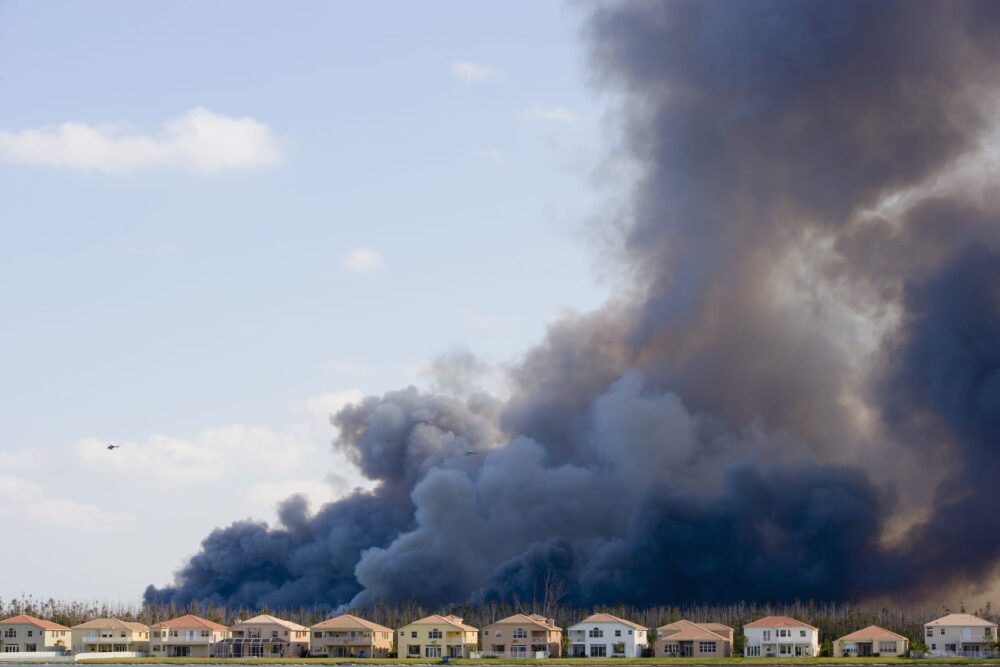
Consistent evidence supports a link between exposure to wildfire smoke and increased pulmonary morbidity, with multiple studies showing associations between levels of particulate matter 2.5 (PM2.5) from wildfires and rates of hospitalization and emergency department (ED) visits for respiratory illnesses such as acute bronchitis, asthma, and chronic obstructive pulmonary disease.1-3 Additionally, some studies have demonstrated associations between exposure to wildfire smoke and an increased risk for cardiovascular disease (CVD).
“Emerging data suggests that wildfire smoke exposure increases cardiovascular events such as heart attacks and cardiovascular hospitalizations, and elderly patients and patients with underlying comorbidities such as cardiovascular disease and respiratory conditions seem to be more susceptible,” explained American Heart Association (AHA) volunteer Sanjay Rajagopalan, MD, FACC, FAHA, chief of cardiovascular medicine and chief academic and scientific officer at University Hospitals Harrington Heart and Vascular Institute in Cleveland, Ohio. “The chemical composition of wildfire smoke suggests that it may be even more toxic than traditional fossil fuel-based emissions.”4
Findings on Wildfire Smoke and CVD Risk
In a study published in 2022 in Geohealth, stratified analyses showed an increase in unscheduled hospital visits in California for all CVDs, ischemic heart disease, and heart failure among non‐Hispanic White patients and patients older than 65 years on days with the highest concentrations of PM2.5 from wildfires. The study authors also reported that higher temperatures may interact with wildfire-derived PM2.5 and further increase hospital visits for CVD among individuals with pre-existing heart disease.1
Another California-based study observed higher rates of ED visits for various CV events, including myocardial infarction (RR, 1.42; 95% CI, 1.09-1.84), ischemic heart disease (RR, 1.22; 95% CI, 1.01-1.47), and heart failure (RR, 1.22; 95% CI, 1.10-1.35) on days with dense smoke, with the highest rates found among adults aged 65 years and older.5
In other studies, the risk for out‐of‐hospital cardiac arrest increased on days with heavy smoke due to California wildfires, and elevated levels of PM2.5 from Colorado wildfires were associated with increased rates of CVD hospitalization and CV mortality (OR, 1.478; 95% CI, 1.12–1.94).6,2
In a study published in 2022, post-wildfire physician visits among older adults increased by 11% (95% CI, 3%-21%) for congestive heart failure and 19% (95% CI, 7%-33%) for ischemic heart disease, and patients with diabetes demonstrated a higher risk for CV morbidity (relative risk [RR], 1.22; 95% CI, 1.01-1.46) and respiratory morbidity (RR , 1.35; 95% CI, 1.09-1.67) following wildfires in Calgary, Canada.7
Other recent research suggests a slight increase in the risk of CV mortality associated with wildfire smoke, with 2 studies showing that 0.55 and 0.56 of CV deaths were attributable to wildfire-related PM2.5 exposure during each study period.8,9
Overall, however, findings regarding the connection between wildfire smoke and CV outcomes are mixed.2 “While some studies have indicated an uptick in emergency room admissions for CVD post-wildfire, others have not,” noted Julio Lamprea Montealegre, MD, PhD, MPH, clinical instructor in the division of cardiology at the University of California San Francisco. “The specific types of cardiovascular events that are most likely affected by wildfire exposure also remain unclear.”
Clinical Implications and Next Steps
Although further research is needed to elucidate the relationship between CVD and wildfire smoke exposure, wildfire-related CV events may become more prevalent with the potential intensification of wildfires in the coming years, according to Dr Rajagopalan and Dr Montealegre. This possibility highlights the need for increased awareness and preparation among patients, providers, and health systems.
“Awareness is the first prerequisite for appropriate intervention, and the association between cardiovascular events and wildfire smoke needs to be widely promulgated amongst health care personnel,” Dr Rajagopalan said. Patient awareness of neighborhood air pollution levels during wildfire episodes is also important. Higher-risk patients, such as the elderly and those with prior CV or respiratory conditions, should be educated about protective measures, he advised.
“The US Environmental Protection Agency (EPA) has set forth recommendations to mitigate exposure to particle pollution, particularly for vulnerable groups including those with pre-existing cardiovascular diseases,” Dr Montealegre stated. “Recommendations encompass both indoor and outdoor measures, such as employing portable air cleaners and limiting outdoor activities during times when the Air Quality Index (AQI) indicates unhealthy levels.”10 Patients and providers can check AirNow.gov to monitor daily AQI forecasts.
As roughly 67% of exposure to PM2.5 from outdoor origins occurs inside the home due to infiltration of outdoor pollutants, efforts to improve indoor air quality are essential in reducing wildfire smoke exposure and related health risks.11
In a review published in 2022 in Circulation, Hadley et al recommended various measures to reduce wildfire smoke exposure and the associated CV impact in affected areas.12 On the individual level, for example, they recommend the use of particle respirators such as N95 masks among vulnerable patients.12
In the health care setting, they recommend that clinicians ensure the aggressive management of traditional CVD risk factors and optimization of medical therapy among at-risk patients prior to the start of each fire season.12
More broadly, they recommend that health care facilities strive for cleaner indoor air and that health systems “make preparations for wildfire season to protect their susceptible patients and avoid shortfalls in beds, supplies, human resources, and key partnerships,” as described in the paper.12
Dr Montealegre emphasized the crucial need for a deeper dive into research aimed at elucidating the CV consequences of wildfire smoke. “Priorities include enhanced exposure science that offers a precise evaluation of individual exposure levels, rigorous mechanistic studies elucidating the connection between pollutants from wildfire smoke and cardiovascular repercussions, and clinical trials assessing the efficacy of mitigation techniques such as air filters in curtailing cardiovascular events,” he said.
Beyond efforts to mitigate the adverse health effects of wildfire smoke in high-risk individuals, the most important broader measures needed in this area are “steps to prevent climate change, which include ongoing efforts at decarbonizing our economy and uncoupling CO2 emissions from economic activity,” Dr Rajagopalan stated. “In this regard, movement to a fossil fuel-free future is not only eminently possible, but may also be associated with better health, better economies, and hopefully better climate in the not-too-distant future.”
This article originally appeared on The Cardiology Advisor
References:
- Heaney A, Stowell JD, Liu JC, Basu R, Marlier M, Kinney P. Impacts of fine particulate matter from wildfire smoke on respiratory and cardiovascular health in California. Geohealth. 2022;6(6):e2021GH000578. doi:10.1029/2021GH000578
- Magzamen S, Gan RW, Liu J, et al. Differential cardiopulmonary health impacts of local and long-range transport of wildfire smoke. Geohealth. 2021;5(3):e2020GH000330. doi:10.1029/2020GH000330
- Hutchinson JA, Vargo J, Milet M, et al. The San Diego 2007 wildfires and Medi-Cal emergency department presentations, inpatient hospitalizations, and outpatient visits: an observational study of smoke exposure periods and a bidirectional case-crossover analysis. PLoS Med. Published online July 10, 2018. doi:10.1371/journal.pmed.1002601
- Aguilera R, Corringham T, Gershunov A, Benmarhnia T. Wildfire smoke impacts respiratory health more than fine particles from other sources: observational evidence from Southern California. Nat Commun. 2021;12(1):1493. doi:10.1038/s41467-021-21708-0
- Wettstein ZS, Hoshiko S, Fahimi J, Harrison RJ, Cascio WE, Rappold AG. Cardiovascular and cerebrovascular emergency department visits associated with wildfire smoke exposure in California in 2015. J Am Heart Assoc. Published online April 11, 2018. doi:10.1161/JAHA.117.007492
- Jones CG, Rappold AG, Vargo J, et al; on behalf of the CARES Surveillance Group. Out-of-hospital cardiac arrests and wildfire-related particulate matter during 2015-2017 California wildfires. J Am Heart Assoc. Published online April 15, 2020. doi:10.1161/JAHA.119.014125
- Mahsin MD, Cabaj J, Saini V. Respiratory and cardiovascular condition-related physician visits associated with wildfire smoke exposure in Calgary, Canada, in 2015: a population-based study. Int J Epidemiol. Published online September 25, 2022. doi:10.1093/ije/dyab206
- Ye T, Xu R, Yue X, et al. Short-term exposure to wildfire-related PM5increases mortality risks and burdens in Brazil. Nat Commun. Published online December 10, 2022. doi:10.1038/s41467-022-35326-x
- Chen G, Guo Y, Yue X, et al. Mortality risk attributable to wildfire-related PM2·5pollution: a global time series study in 749 locations. Lancet Planet Health. 2021;5(9):e579-e587. doi:10.1016/S2542-5196(21)00200-X
- US Environmental Protection Agency. Air quality guide for particle pollution. Published February 2023. Accessed September 15, 2023.
- Azimi P, Stephens B. A framework for estimating the US mortality burden of fine particulate matter exposure attributable to indoor and outdoor microenvironments. J Expo Sci Environ Epidemiol. Published online December 5, 2018. doi:10.1038/s41370-018-0103-4
- Hadley MB, Henderson SB, Brauer M, Vedanthan R. Protecting cardiovascular health from wildfire smoke. Circulation. Published online September 6, 2022. doi:10.1161/CIRCULATIONAHA.121.058058


