
 Share on Facebook
 Share on Twitter
 Share on LinkedIn
 Share by Email
 Print
Print
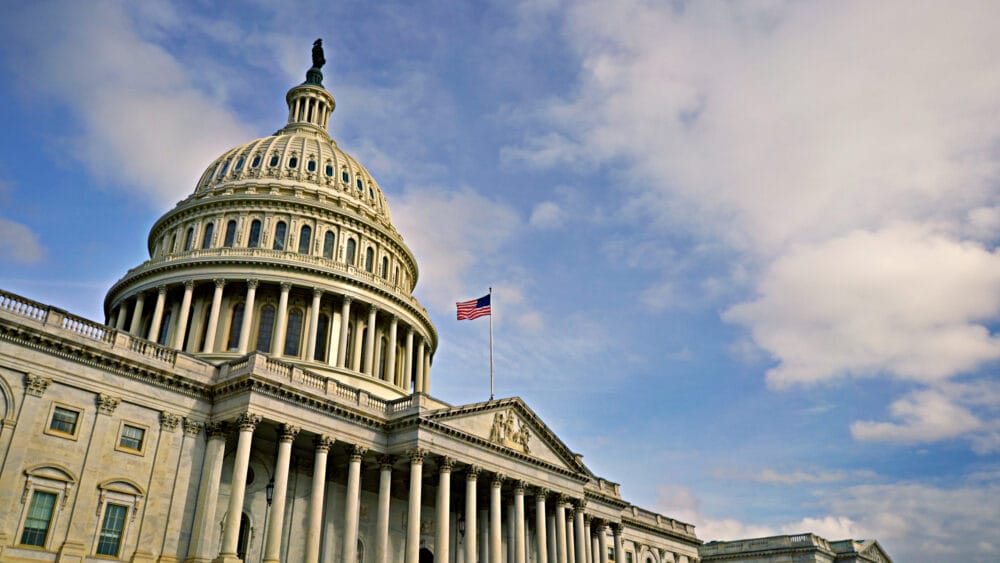
The American Academy of Neurology (AAN) held its 22nd annual “Neurology on the Hill” (NOH) in late February this year. Over 150 neurologists met with lawmakers in Washington, D.C., to request support for the Safe Step Act and brain research, along with addressing new Medicare cuts.1
Support of the Safe Step Act of 2023
A management strategy established by insurance companies known as “step therapy,” requires a patient to prove “failure” of a cheaper medication before they can gain access to a better, more expensive one.1,2 While step therapy is meant to keep spending down for patients, neurologists point out that it also delays treatment and disregards a patient’s specific circumstances or medical history. Ultimately, in specific situations, step therapy can cause more harm than good. Furthermore, these protocols are only in place because the United States has failed to address already high drug prices.3
Neurologists are currently asking congress to support the Safe Step Act of 2023, which could improve how clinicians use step therapy. It would provide patients with safer, more transparent care by allowing exemptions; if a patient needs higher quality, more expensive care faster, they should be granted immediate access. Neurologists agree that patients should not have to wait for better care.3,4
Addressing Medicare Cuts
Neurologists also asked Congress to speak to the 3.4% cut to the Medicare Physician Fee Schedule that has gone unaddressed since January 1, 2024. Health care providers and patients already face many challenges under the U.S. Medicare payment system, and these cuts only make it harder for neurologists to provide high quality care to patients in need.
Earlier this year, Congress communicated that they would address and fix these cuts by January 19, allowing Medicare reimbursements to be processed. For many neurologists, services delivered prior to cuts being addressed would be paid at a lower rate. However, no deal was reached on January 19, and no temporary fix was provided. If the timeline had gone as it was intended, it is likely neurologists would not face as many issues with reimbursement or withholding claims. However, on March 8, in a budget package passed by Congress, a partial fix to the 3.37% cut to the Medicare Physician Fee Schedule (MPFS) was made. Congress increased the Medicare conversion factor by 1.68%.5 According to the AAN news release, the partial fix is not retroactive and will only be applied to services provided from March 9 through December 31, 2024.
Maintain Funding for NINDS and BRAIN Initiative
Neurologists will continue to ask lawmakers to maintain funding for the National Institute of Neurological Disorders and Stroke (NINDS) and the Brain Research through Advancing Innovative Neurotechnologies (BRAIN) initiative. Both the NINDS and the BRAINS initiative allow neurologists to continuously improve their understanding of the human brain, which ultimately provides patients with better care.1
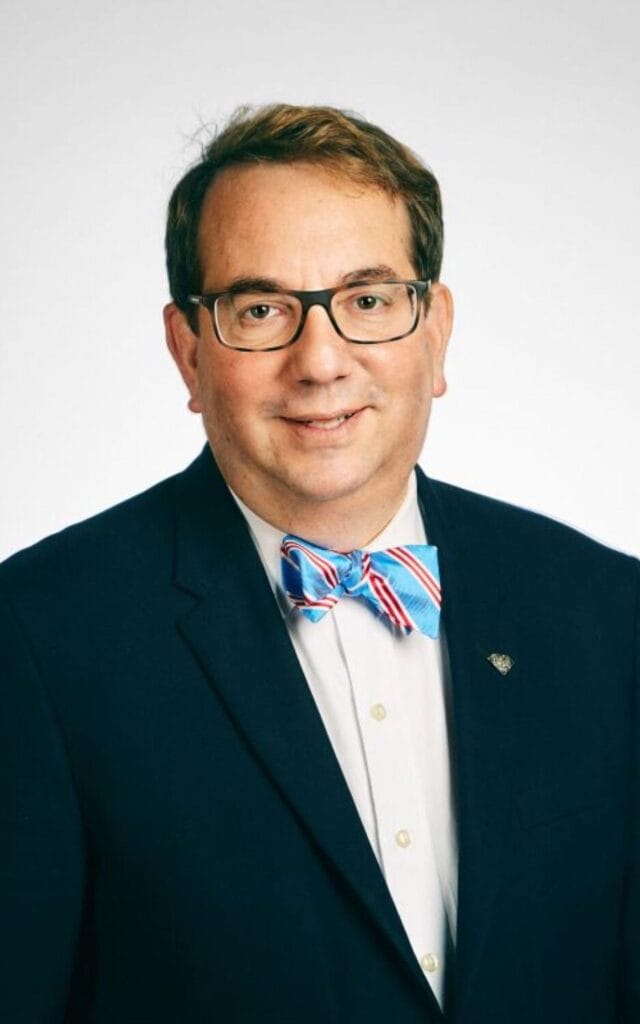
We reached out to Bruce H. Cohen, MD, FAAN, chair of the AAN’s Advocacy Committee, and Amy K. Guzik, MD, FAAN, member of the AAN’s Advocacy Engagement Subcommittee, to better understand how these laws affect neurologists and their care, and why NOH matters.

Can you talk about the progress that’s been made in advocating for patients and neurologists over the last several years at the AAN’s NOH?
Dr Cohen: Advocacy is a long process, and while we don’t always see immediate results from our Capitol Hill visits, the AAN has had some notable successes over the past few years.
As the public health emergency from COVID-19 came to an end, the flexibilities that allowed for broad telehealth adoption were also going to end. In 2020, 2021, and 2022, neurologists asked for those flexibilities to be extended. Congress acted, allowing telehealth flexibilities to continue through December 31, 2024.
Over several years, neurologists have asked their members of Congress to reform prior authorization requirements in Medicare Advantage plans. The Seniors Timely Access to Care Act passed the House in 2022 but was unable to pass the Senate. However, due to the strong, bi-partisan support the bill received, the Centers for Medicare & Medicaid Services (CMS) just recently engaged in rule-making that would implement many of the provisions of the bill, including electronic prior-authorization.
We have also seen a steady increase in funding for neuroscience research, a regular ‘ask’ to legislators by neurologists attending NOH.
Can you share how you got involved with NOH? What keeps you coming back year after year? What would you like your colleagues who are not familiar with NOH know?
Dr Guzik: I first applied for NOH in 2017 in a moment of frustration with the ways in which politics and policies were impacting the care of patients in my communities. I realized that this was a way I could contribute to the discussion and share my expertise and [gain] on the-ground-experience with our legislators. They really want to know how policies are impacting our patients — their constituents — and the impact that legislation is having in the health care system. I keep coming back because I know that NOH, and all forms of AAN advocacy engagement, keeps our place at the table as policy is made. It’s how we best speak up for our patients and our profession.
The 2024 priorities this year are addressing Medicare cuts to support physician practices, the Safe Step Act, and additional funding for research. How were these priorities selected and what about each priority makes it urgent to address in 2024?
Dr Cohen: The priority topics for NOH are decided by the Advocacy committee. This year, because of the timing of NOH and legislative activity, these 3 issues were where we believed neurologists could have the greatest impact.
A fix to the Medicare cuts had not yet been addressed by Congress when neurologists were on Capitol Hill for NOH. It was imperative that legislators heard from neurologists about how the cuts negatively affected their patients and practice. Congress heard us — and many other physician organizations — and passed legislation the week after NOH that reduced the cut by 1.68%.
Step therapy reform had been an active issue on the hill, and it was possible that the Safe Step Act would be included in an upcoming government funding package. Unfortunately, that was not able to come together, but we successfully advocated for additional co-sponsors for the bill.
Finally, Congress was just getting ready to start their process for the 2025 fiscal year funding, so it was an opportune time for neurologists to advocate for additional federal funding for neuroscience research.
The Safe Step Act outlines 5 circumstances that insurers would be required to grant an exception to step-therapy protocols. One of the outstanding challenges is the extensive documentation necessary to show proof to insurers. How can we balance progress — the fact that exceptions are available in the first place — with the additional administrative burdens for neurologists?
Dr Guzik: The important thing to center when addressing Safe Step processes is that we are ensuring patients receive appropriate care in a timely manner. While making exceptions available addresses one barrier to care, if additional administrative burdens are added, patients still aren’t getting the care or treatments they need when they need it. This is particularly critical for patients with neurologic conditions, where delays or lack of access to appropriate medications can mean seizures, progression of brain lesions, additional disability, or even death. Comprehensive legislation needs to address both exceptions to utilization management tools such as step therapy, and clear and efficient request and response processes to get patients the medications they need quickly.
Some clinicians want to advocate for patients but cannot make the trip to NOH. What are some other ways could they help?
Dr Cohen: We encourage AAN members to watch for communications from our advocacy team with opportunities to advocate from home. When important legislation is coming up, the AAN sends out action alerts that allow you to easily write to your members of Congress with the click of a button. NOH is another AAN program where members reach out to the district offices for their members of Congress and meet with them while they are back home for the August district work period. If you want to learn more about how to get involved, visit www.aan.com/advocacy.
Editor’s note: Some responses have been revised for clarity and brevity.
References:
- Neurologists ask lawmakers for improved access to care at Neurology on the Hill. News release. AAN. February 22, 2024. Accessed April 4, 2024. https://www.aan.com/PressRoom/Home/PressRelease/5146
- Senator Hassan and colleagues reintroduce bipartisan bill to ensure that patients can get the medication they need. News release. Maggie Hassan: United States Senator for New Hampshire. March 10, 2024. Accessed April 4, 2024. https://www.hassan.senate.gov/news/press-releases/senator-hassan-and-colleagues-reintroduce-bipartisan-bill-to-ensure-that-patients-can-get-the-medication-they-need
- Sachs RE, Kyle MA. Step therapy’s balancing act – protecting patients while addressing high drug prices. N Engl J Med. 2022;386(10):901-904. doi:10.1056/NEJMp2117582.
- 652. Safe Step Act. Congress 118. 2023-2024. https://www.congress.gov/bill/118th-congress/senate-bill/652
- Congress Acts on Medicare Cuts. Capitol Hill Report. AAN. March 11, 2024. Accessed April 30, 2024. https://www.aan.com/advocacy/medicare-reimbursement-update-chr


