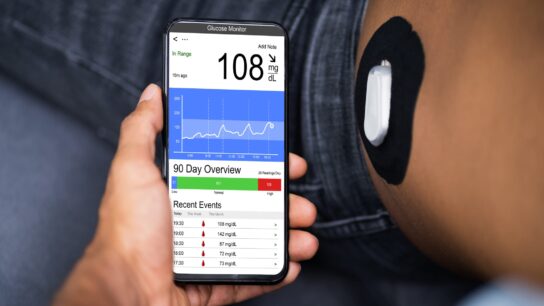
While HIPAA rules protect health information of patients in hospitals and for physician visits, generally they do not protect the privacy or security of a patient’s health and wellness information when it is created accessed through or stored on personal cell phones or tablets, or fitness trackers.

Features
The compensation disparities between primary care physicians and specialists and between male and female physicians continues to be a subject of ongoing concern.
The American Medical Association (AMA) releases an annual National Burnout Benchmarking report, which provides data on physician job satisfaction and burnout.
The author describes the evolution of the workweek and how shortening the expected hours for full-time work without a decrease in compensation may increase the well-being of health care providers while not decreasing current productivity.
Analiz Rodriguez, MD, a neurosurgeon in Arkansas, recounts her experience with misogynoir during her residency training and the toll it took on her as a Black woman.
Suma Shah, MD, reveals the many ways women in neurology are underrepresented and the steps women can take to close the gender gap in multiple areas of the field.
Barney Stern, MD, and Andrew Russman, DO, share how the COVID-19 pandemic has changed neurology practice, including patient access to care, staffing shortages, and increased burnout.
Approximately 5% to 10% of shift workers, including many health care professionals, have shift work disorder, a circadian sleep-wake cycle disorder defined by poor quality sleep.
When patients are able to articulate their beliefs, it can help them move from making what may have been an unconscious choice into a conscious one.
Two neurologists explain the importance of virtual residency recruitment to promote diversity, equity, and inclusion in neurology, and the future of hybrid recruitment and its challenges.
In addition to instituting flexible work schedules to attract and retain employees, practices can consider technologic solutions that reduce staffing needs by improving office efficiency.
The pandemic has accelerated the number of clinicians retiring from practice.
Many organizations adopt overly conservative policies that restrict otherwise completely legal uses of health care data.
The American Academy of Pediatrics (AAP) released a policy statement and an accompanying clinical report on identifying and addressing the effects of trauma and stress on children, families, and their health care providers.
Expert discusses common medical record documentation mistakes, including failing to update prepopulated or copied notes from a previous visit.
Among other considerations, health care providers must avoid giving individual medical advice.
Diane E. Meier, the Director of the Center to Advance Palliative Care, discusses how neurologists can increase quality palliative care communication and encourage better clinician/patient confidence and care.
Core provisions of the HIPAA legislation have largely remained unchanged since their inception despite rapid evolution of technology to keep protected health information from hackers.
The field of medicine has been plagued by the underrepresentation of African Americans, people of Hispanic heritage, and Native Americans, as well as institutional racism and sexism that have persisted for decades.
What is the power of touch and how has it played into the history of clinical treatment as well as our current reality?
For telemedicine to thrive in a postpandemic era, temporary rules regarding reimbursement and providers’ ability to fully care for the patient in any setting must be made permanent.
The researchers conducted 1103 surveys, encompassing 464 US physicians.
Computer access to digital health information varies by race and ethnicity, a study found.
Many healthcare providers are unclear as to when a request is made by an individual pursuant to a HIPAA authorization versus a HIPAA access request, particularly when a patient wants records to be sent to a third party, a HIPAA compliance officer at a law firm explained.
We speak with Mildred Solomon, EdD, President of the Hastings Center and Professor of Global Health and Social Medicine at Harvard Medical School, where she directs the school’s Fellowship in Bioethics, about the COVID-19 pandemic, health equity, and vaccine distribution.
The Office for Civil Rights in the US Department of Health and Human Services announced proposed changes to strengthen patients’ rights to access their own health information, improve care coordination, and reduce regulatory burdens.
Healthcare providers should take steps now to ensure that the telehealth modalities they use are HIPAA compliant.
When talking about work issues, Dr Bernstein recommends trying not to focus too much on how awful things are because it can be disheartening.
Regardless of the challenges a smaller group might have, a risk assessment is a baseline for any HIPAA program. The cost of this assessment is considerably less than a HIPAA fine.
The ENSG-WFN published a report that details current understanding of the neurologic impacts of COVID-19.