
Researchers performed a meta-analysis evaluating the diagnostic accuracy and prognostic utility of intraoperative neuromonitoring in non-tumor thoracic spine surgeries.
News
Researchers aimed to determine whether wheelchair use plus an exoskeleton vs wheelchair use alone improves patient-reported mental and physical health outcomes.

An intervention that involves preoperative patient education and smaller prescription quantity successfully reduces opioid use while maintaining pain control following posterior spinal fusion for adolescent idiopathic scoliosis.
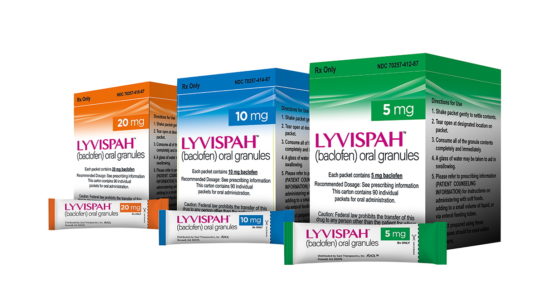
The approval was based upon a bioavailability study in healthy adults comparing baclofen oral tablets to Lyvispah.

A combined unsupervised and supervised machine learning (ML) technique can help predict long-term SCS response for patients with chronic pain.
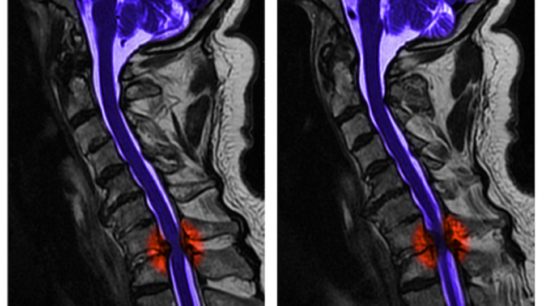
Adults with traumatic spinal cord injury (SCI) have a higher incidence of and risk for common psychological morbidities.
In a randomized clinical trial, researchers determined whether early surgical treatment yields better motor recovery than delayed surgical treatment for patients with cervical spinal cord injury.
Researchers observed the trajectories of tissue-specific spinal cord neurodegeneration above and below traumatic and nontraumatic spinal cord injuries.
The researchers aimed to determine the efficacy and withdrawal rates of therapies used to manage the chronic pain of spinal cord injury as well as the incidence of adverse events.
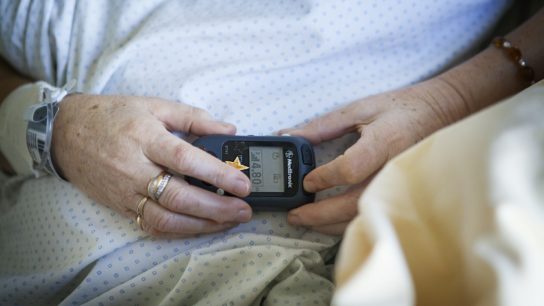
Some Pain Improvement With High-Frequency Spinal Cord Stimulation After Conventional Treatment Fails
Investigators assessed the efficacy of 10-kHz high-frequency devices as a rescue treatment in patients with failed conventional spinal cord stimulation therapy for chronic pain without needing to change the spinal hardware.
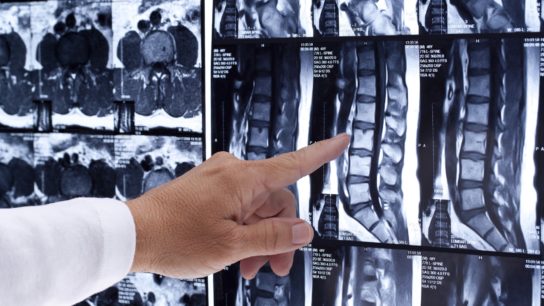
Study authors assessed the impact of splanchnic occlusive disease on spinal cord injury after descending thoracic and thoracoabdominal aneurysm open repair.
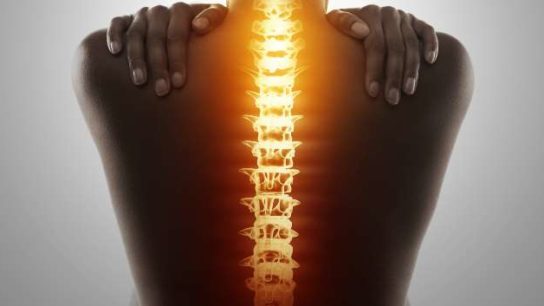
Elezanumab is a monoclonal antibody of the human IgG1 isotype that works by binding selectively to repulsive guidance molecule A.
Compared with adults without SCI, adults with traumatic SCI have an increased incidence of psychological morbidities and multimorbidity.

The FDA has granted Fast Track designation to AXER-204 (ReNetX Bio) for the potential treatment of chronic spinal cord injury.
Frailty is an important predictor of worse outcome after traumatic spinal cord injury (tSCI) in patients <75 years of age.
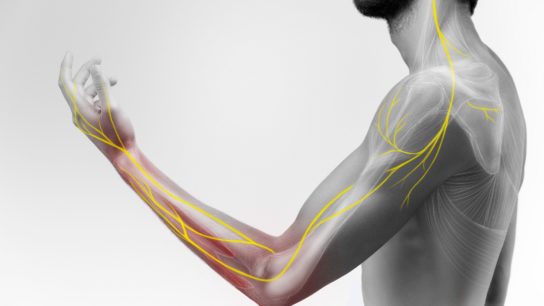
Nerve transfer surgery is a safe, effective complement to surgeries for upper limb reanimation in tetraplegia and can lead to significant functional improvement.
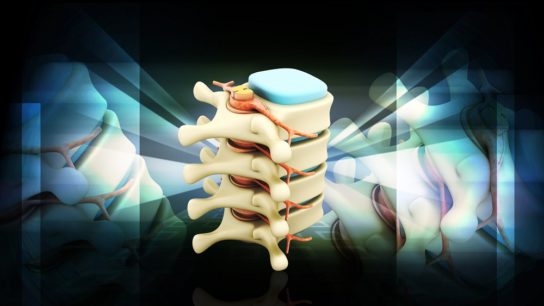
Cervical spine injuries occur less frequently among motorcycle crash victims who were wearing a helmet versus those not wearing a helmet at the time of injury.
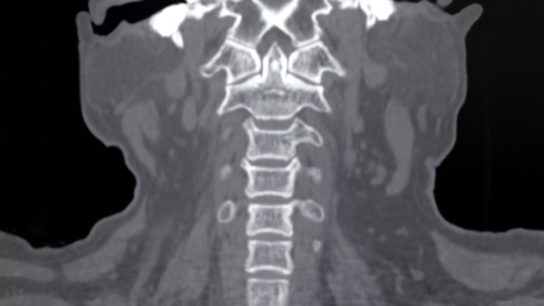
MRI had lower health benefit and higher cost compared with no follow-up after normal CT findings.
Use of the stimulation resolved the patient’s orthostatic hypotension, which is prevalent and quite debilitating among individuals with spinal cord injury.
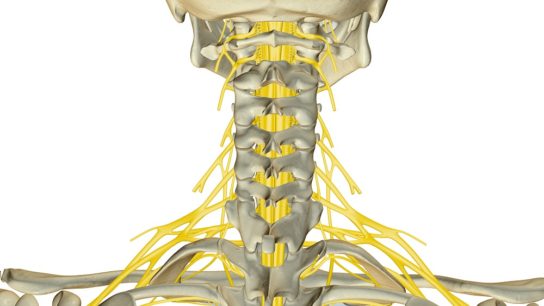
Patients who underwent C7 nerve transfer and rehabilitation experienced better functional improvement than those who underwent rehabilitation alone.
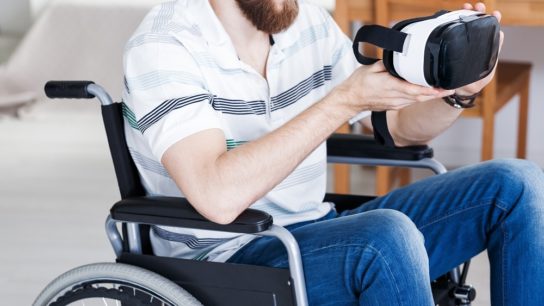
Virtual reality and multisensory stimulation could play a role in rehabilitation for patients with spinal cord injury.
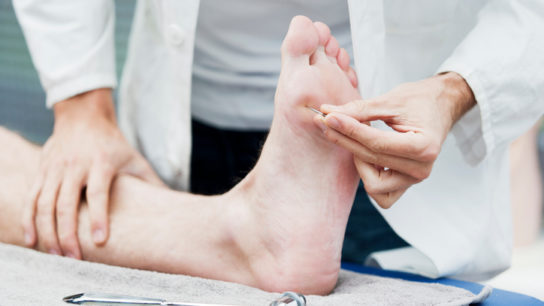
The update focused on diagnosis of neuropathic pain in patients with spinal cord injury, stroke, or multiple sclerosis.
The recommendations promote the use of hot compresses and physical therapy as first-line treatment of low back pain.
A specially designed shirt produced tiny vibrations on their arms every time the avatar moved, providing tactile feedback of each step taken.
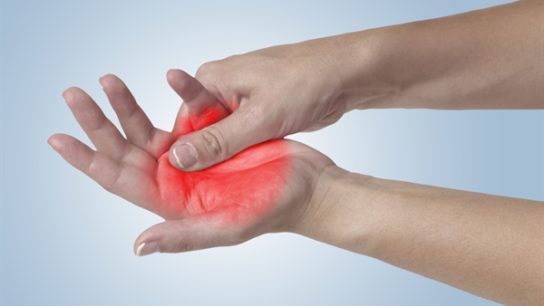
Pain relief was linked to significant improvements in sleep, among other factors.

The AAPM&R and the AANS are coming together to track outcomes.
At 4 and 8 weeks after injection, 55% and 45%, respectively, reported pain relief of 20% or greater.
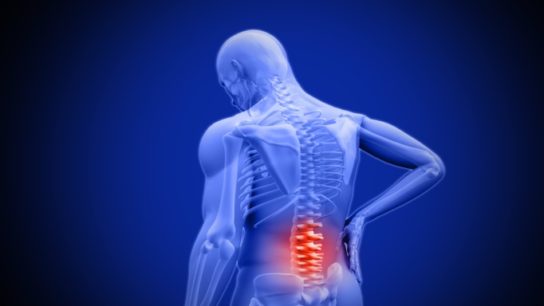
Investigators found that the intensity of neuropathic pain in those with SCI was negatively correlated with motor cortical remapping.
D-dimer level at 2 weeks after injury accurately predicts deep vein thrombosis formation.
The system bypasses the injured spinal cord, passing the signal from the brain through a computer before sending it to electrodes in the legs.


