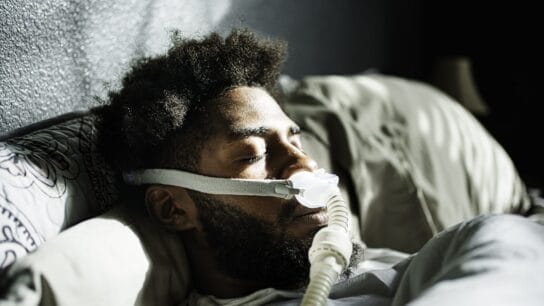
With the FDA approval of Zepbound (tirzepatide) for obstructive sleep apnea, GLP-1 receptor agonists harbor potential beyond weight and diabetes management.

With the FDA approval of Zepbound (tirzepatide) for obstructive sleep apnea, GLP-1 receptor agonists harbor potential beyond weight and diabetes management.

Black women face many challenges when receiving adequate sleep disorder treatment and diagnoses including neighborhood disadvantage, anti-Black ideologies, and the Superwoman schema.

Dr Umakanth Katwa and Dr Rafael Pelayo give clinical guidance on the accurate diagnosis and evidence-based treatment of pediatric insomnia.

The American Academy of Sleep Medicine published guidance regarding the treatment of restless leg syndrome and periodic limb movement disorder.
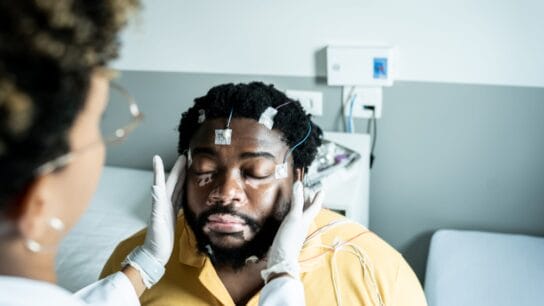
The ESRS and the EIN have released a guideline update for clinicians on the latest insights into insomnia and its treatment.

There is a strong association between sleep disorders, specifically insomnia, and neurologic disorders.

A clear link has been established between poor sleep and the incidence of rheumatic, neurodegenerative, and autoimmune conditions.

Sandeep Prakash Khot, MD, MPH, discusses how sleep disorders can add to the burden of stroke and recurrent stroke, and how to improve prevention and treatment strategies for both conditions.

The Wake Up America Survey is an annual online survey conducted in partnership with The Harris Poll.
Findings published in 2020 suggest that irregular sleep schedules may increase CVD risk independent of sleep quality or duration.

Danny Eckert, PhD, a researcher on human sleep and respiratory physiology, explains the potential bidirectional relationship and the clinical complications of COMISA, comorbid insomnia and sleep apnea.

Richard K. Bogan, MD, discusses the importance of lowering sodium intake and improving heart health for patients with narcolepsy.

Apps for detecting sleep apnea are increasingly popular, but are they effective — and is the data they generate relevant for clinicians?

In an interview, sleep medicine experts Milena K Pavlova, MD, and Rachel Ziegler, MD, discuss the latest developments in sleep disorder therapies and the existing gaps in sleep medicine.

We interview experts Younghoon Kwon, MD, MS, FACC, and Richard J Castriotta, MD, FCCP, FAASM, about the connections between obstructive sleep apnea-sudden cardiac death.

A survey of health care providers found a lack of knowledge on idiopathic hypersomnia (IH) among physicians, and that the disorder is often misdiagnosed. We spoke with Richard Bogan, MD, FCCP, FAASM, associate clinical professor at the University of the South Carolina School of Medicine about IH and criteria for diagnosing this sleep disorder.

To learn more about the potential role of cannabinoids in the management of sleep disorders, we interviewed Aleksandra M. Kwasnik, MD, who recently coauthored a review on the topic.
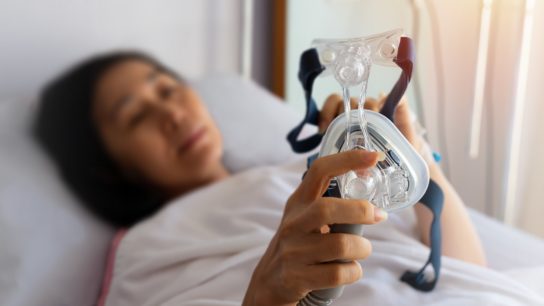
Mask-related side effects have been cited as the most important factor influencing adherence to continuous positive airway pressure (CPAP) therapy.

Obstructive sleep apnea may represent another important variable contributing to increased risk related to COVID-19.

Only 65.2% of adults surveyed in United States in 2014 reported that they consistently get at least 7 hours of sleep each night.

Melatonin and other melatonin receptor agonists have demonstrated efficacy in the treatment of circadian rhythm disorders in both pediatric and adult populations.
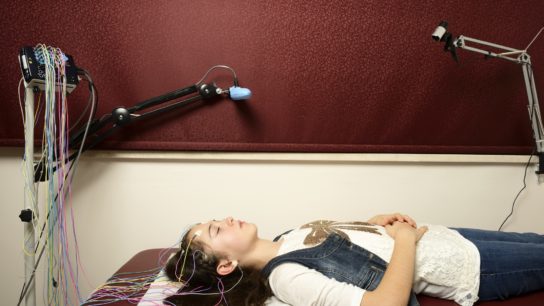
The bidirectional relationship between migraine and sleep disorders are examined in this article.

There is an emerging view that sleep disorders are not merely symptoms of psychiatric conditions; instead there may be a complex, bidirectional relationship between psychiatric and sleep disorders.

In this review, study authors discuss and summarize the current evidence for the evaluation and management of the most prevalent and well-described conditions in SCI, including impact of SCI on sleep and daytime function.
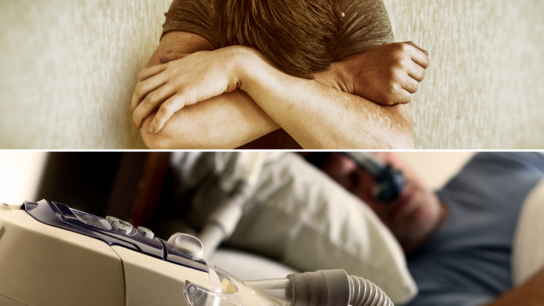
Common comorbidities in OSA such as cardiovascular disease and metabolic abnormalities, may confer a higher risk for the development of mental and cognitive impairment in patients with OSA compared with the general population.

There are guidelines that should be followed when treating patients with insomnia.

With an increasing emphasis on value, health care providers who treat sleep disorders should focus on adopting quality measures to ensure patient-centered care.

Researchers are nearly convinced narcolepsy is the result of an autoimmune response, but one crucial factor is still missing.
Sleep experts weigh in on whether the NSF’s new sleep recommendations are appropriate and beneficial for the general population.
The broad pathology of sleep disorders can make diagnosis and treatment complicated.

You’ve read {{metering-count}} of {{metering-total}} articles this month.
We want you to take advantage of everything Neurology Advisor has to offer. To view unlimited content, log in or register for free.
{{login-button}} {{register-button}}
Want to view more content from Neurology Advisor?
Register now at no charge to access unlimited clinical news with personalized daily picks for you, full-length features, case studies, conference coverage, and more.
{{login-button}} {{register-button}}
Please login or register first to view this content.

