
The main challenge is to determine when treating tardive dyskinesia with any pharmacological agent would provide a net benefit.

The main challenge is to determine when treating tardive dyskinesia with any pharmacological agent would provide a net benefit.

Debate continues as to whether ocular tremor represents a clinical marker of Parkinson’s disease or a compensatory movement related to other bodily tremors.

Investigators identified a series of prodromal signs that appear anywhere from 1 to 18 years before a clinical diagnosis of SCA2.
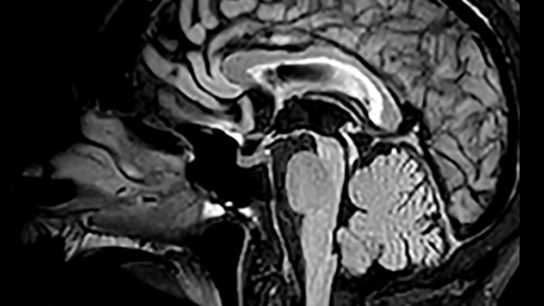
New guidelines for progressive supranuclear palsy provide very specific and sensitive criteria that allow for identification of clinical features of the disease at much earlier stages.

A patient should be notified of the possibility of developing an ICD before initiating any dopaminergic treatment for PD, particularly dopamine agonists.

Comorbid psychological conditions affect cognitive function in Parkinson’s disease, and treatment can be complicated by overlapping symptoms.

Research has shown a confounding link between nicotine and reduced risk of Parkinson’s disease.

Parkinson’s disease psychosis is underreported and is difficult to treat, but a new drug in late-stage development is a promising therapy.

The role of GCH1 mutations in Parkinson’s disease is complicated by the mutation’s seemingly exclusive role in dopa-responsive dystonia.

Closed-loop neurostimulation technology is being investigated for movement disorders, headache, and even some neuropsychiatric disorders.
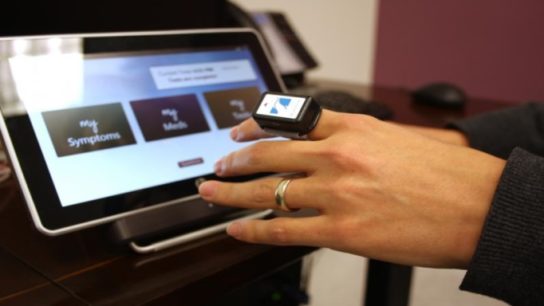
Motion-sensing technology provides a lot of data, but researchers still aren’t sure if it’s clinically useful.

Several anti-diabetes agents hold promise for Parkinson’s disease-related neurodegeneration.

You’ve read {{metering-count}} of {{metering-total}} articles this month.
We want you to take advantage of everything Neurology Advisor has to offer. To view unlimited content, log in or register for free.
{{login-button}} {{register-button}}
Want to view more content from Neurology Advisor?
Register now at no charge to access unlimited clinical news with personalized daily picks for you, full-length features, case studies, conference coverage, and more.
{{login-button}} {{register-button}}
Please login or register first to view this content.

