
Dr Viola Vaccarino and Dr Elizabeth Vella discuss the link between anger, stress and cardiovascular events.

Dr Viola Vaccarino and Dr Elizabeth Vella discuss the link between anger, stress and cardiovascular events.

Drs Lucke-Wolde and Sun discuss the incidence of and risk factors for pediatric stroke, as well as advances and remaining gaps in the field.

Dr Bahouth discusses the barriers and strategies for alleviating caregiver burden, especially for those that care for patients with stroke.

Researchers examine the link between sickle cell disease and cerebrovascular incidents.

Polypill therapy for cardiovascular disease may help address some barriers to care and health care disparities.
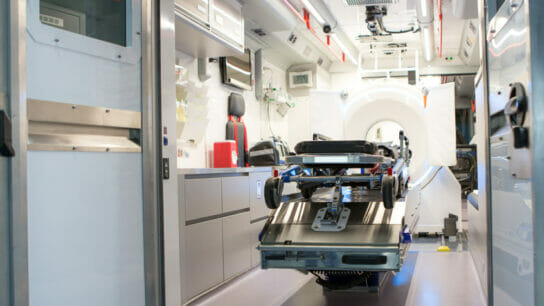
Two neurologists discuss the barriers to timely tPA administration in acute stroke, including the implementation of mobile stroke units.

Sameed Khatana MD, and Barrak Alahmad, MD, discuss the impact of climate change on patients’ risk for cardiovascular disease.

Christa O’Hana S. Nobleza, MD, MSCI, a board certified physician who specializes in neurocritical care, highlights the importance of addressing mental health needs and finding solutions for physicians.

Patients with AF with a high bleeding risk and a low stroke risk may benefit from LAAO over oral anticoagulation.

Stroke-associated pneumonia research over the past 2 decades has yielded significant insight into SAP risk factors, diagnostic measures, and management strategies.

In an interview, Jeffrey S Berger, MD, shares his thoughts on updated USPSTF guidelines that address risk of major bleeding from aspirin use for primary prevention of CVD.

An overview of the role of statins in reducing in-hospital deaths due to COVID-19, using findings from the American Heart Association’s COVID-19 Cardiovascular Disease Registry.

Primary central nervous system vasculitis is an important but rare differential diagnosis in daily neurological practice, warranting the need of a step by step approach.

Neurology Advisor spoke with Dr Tom Yao, Neurosurgeon at Norton Health and Johnson & Johnson consultant, regarding the CERONEVUS study and the future prospects of stroke research.
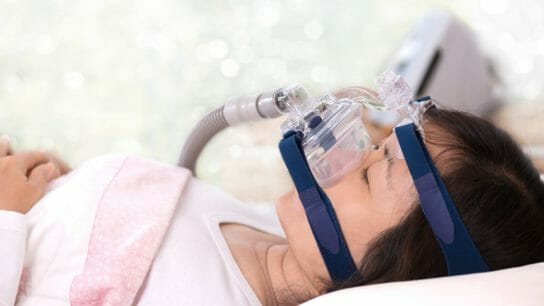
The AHA outlines screening, diagnosis, and treatment recommendations for obstructive sleep apnea and CV complications tied to the sleep disorder.

Researchers sought to highlight several recent advances in the epidemiology, pathogenesis, clinical features, investigation, acute management, and secondary prevention of cerebrovascular diseases in patients with hematological diseases.

A number of clinical resources are available to help clinicians provide care and support for their patients with hypertension and encourage them to adopt healthy lifestyles.
AHA/ASA Stroke Council leadership published temporary emergency guidance for stroke management in the midst of COVID-19.

Researchers find automated CT perfusion is an important tool in the triage and treatment decision making in acute ischemic stroke.
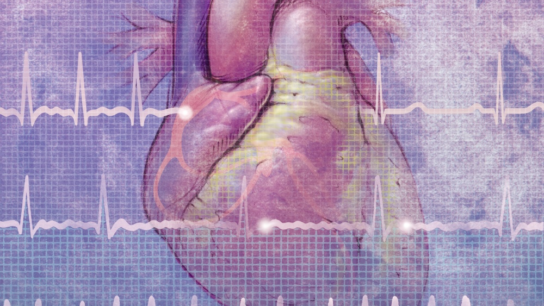
Atrial fibrillation, which affects up to 46.3 million people globally and 2.7 to 6.1 million individuals in the US, may represent a modifiable risk factor for acute stroke.
The American Heart Association and American Stroke Association have released an update to their 2018 guidelines for the early management of acute ischemic stroke.

Two similarly controlled landmark trials provide conflicting results regarding the clinical guidelines for management of acute hypertension in individuals with intracerebral hemorrhage. However, focusing exclusively on blood pressure targets may obscure a critical finding.

A multidisciplinary writing group organized by the AHA Emergency Cardiovascular Care Science Subcommittee released recommendations to improve the quality of adult and pediatric neurologic prognostication studies for survivors of cardiac arrest.

The link between negative respiratory effects and air pollution is intuitive however, recent research has shown a robust association between pollution and myocardial infarction, heart failure, and stroke.

A recent meta-analysis found there is insufficient evidence supporting the link between some forms of subclinical atrial fibrillation and an increased risk of thrombotic events.

The American Heart Association has updated its scientific statement on blood pressure readings.
In order to revise the guidelines, the Task Force reviewed clinical trials presented at the annual scientific meetings of the ACC, AHA, HRS, and European Society of Cardiology in addition to other peer-reviewed, published data.

Even with thorough testing, declaring a patent foramen ovale as the most likely culprit responsible for a cryptogenic stroke remains a challenge.

The ultimate goal of stroke assessment is to enable physicians to make treatment decisions that are individualized and appropriate to the patient’s needs, thereby improving patient outcomes.

For more details about differences in stroke risk, prevention, and treatment in women, Neurology Advisor spoke with Elisabeth B. Marsh, MD, from Johns Hopkins School of Medicine and Kristy Yuan, MD, from the University of Pennsylvania.

You’ve read {{metering-count}} of {{metering-total}} articles this month.
We want you to take advantage of everything Neurology Advisor has to offer. To view unlimited content, log in or register for free.
{{login-button}} {{register-button}}
Want to view more content from Neurology Advisor?
Register now at no charge to access unlimited clinical news with personalized daily picks for you, full-length features, case studies, conference coverage, and more.
{{login-button}} {{register-button}}
Please login or register first to view this content.

