
Study researchers evaluated the incidence and risk factors for seizure development among patients with brain metastases.
News
The incidence of venous thromboembolism and major bleeding is high among patients with primary central nervous system lymphoma.
Findings from the study showed 44% of patients treated with berubicin experienced a statistically significant improvement in progression free survival.
Treatment disparities may explain worse outcomes for pediatric black and Hispanic brain cancer patients.
In the era of increasing survival of cancer patients, there are also changes in the presentation and outcomes of patients with pituitary metastasis.
The application is supported by data from 2 pivotal open-label, randomized phase 3 trials (SIOPEL 6 and ACCL0431), which compared the efficacy of sodium thiosulfate plus cisplatin to cisplatin alone for the prevention of cisplatin-induced hearing loss.
An open-source smartphone and web application has been developed to help predict clinical malignancy and survival outcomes for meningioma.
Maximal resection of a contrast-enhanced (CE) tumor is associated with improved overall survival in patients with isocitrate dehydrogenase gene 1 or 2 (IDH)-wild-type and IDH-mutant subtype glioblastomas.
A novel workflow that combines advanced optical imaging with an artificial intelligence algorithm may accurately diagnose brain tumors in real time in the operating room.
The Food and Drug Administration (FDA) has granted Orphan Drug Designation to zotiraciclib (Adastra Pharmaceuticals) for the treatment of glioma.
Visual symptoms are a vital component of the morbidity encountered in patients with pituitary adenoma, can present at all stages of the disease, and may negatively affect daily activities and overall quality of life, a new review claims.
Survivors of childhood low-grade gliomas treated with radiotherapy have poorer neuropsychological and socioeconomic-status outcomes.
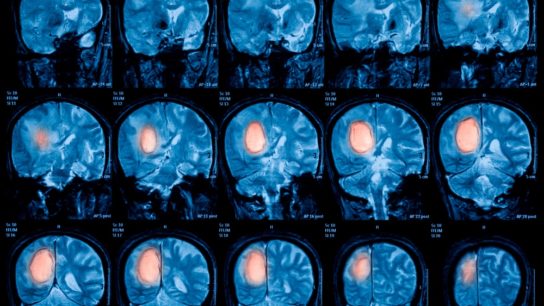
Computer-assisted diagnosis (CAD) can help physicians detect growth of low-grade gliomas.
AbbVie has halted enrollment in all ongoing studies of depatuxizumab mafodotin, after an Independent Data Monitoring Committee (IDMC) recommended a phase 3 study of the treatment be stopped due to a lack of survival benefit.
Highest incidence seen for patients with non-small cell lung cancer and triple-negative breast cancer

According to researchers, neovascularization is more common in glioblastoma, and extravasation is more common in primary CNS lymphoma.
This study involved the engineering of CAR-T cells specific for the EGFRvIII antigen to also secrete bispecific T cell engagers (BiTEs) against wild-type EGFR.
Neoadjuvant administration of programmed cell death protein 1 (PD-1) blockade seems to enhance local and systemic antitumor immune response in glioblastoma.
In certain parts of the analysis, the use of selective COX-2 inhibitors and metamizol was associated with inferior patient survival.
In preclinical models, the inhibition of phosphorylated STAT3 (p-STAT3) by WP1066 resulted in the direct attack of various tumor cells.
Standard therapy is more effective for female vs male patients with glioblastoma.
The presence of visible fluorescence can serve as an intraoperative diagnostic surgical biomarker of high-grade glioma within a brain tumor.
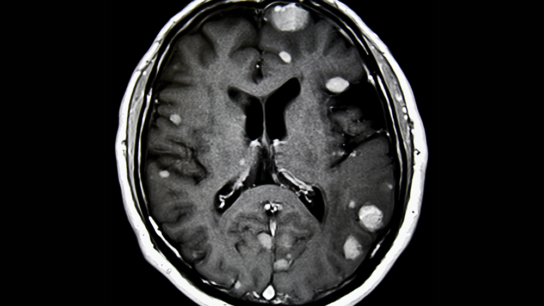
For patients with melanoma and untreated brain metastases, nivolumab combined with ipilimumab shows clinically meaningful efficacy.
PVSRIPO is a prototypic oncolytic recombinant polio virus vaccine that recognizes the poliovirus receptor CD155, which is widely expressed in neoplastic cells of solid tumors.
Participants receiving TTFields with temozolomide experienced significantly longer deterioration-free survival for global health vs those receiving temozolomide only.
The FDA has granted full approval of Avastin for the treatment of glioblastoma.
Treatment with lomustine plus bevacizumab does not show a survival advantage over treatment with lomustine alone in patients with glioblastoma.
1p/19q non-co-deleted anaplastic gliomas are associated with lower sensitivity to chemotherapy and worse prognosis than 1p/19q co-deleted tumors.
In patients with melanoma brain metastases, overall survival has increased since 2000.
The use of postoperative stereotactic radiosurgery could be a substitute for whole-brain radiotherapy, which has been linked to cognitive adverse effects.


