
Researchers established the PICTURE system using 2141 pathology slides collected worldwide to address the challenge of distinguishing glioblastoma and primary CNS lymphoma.
News
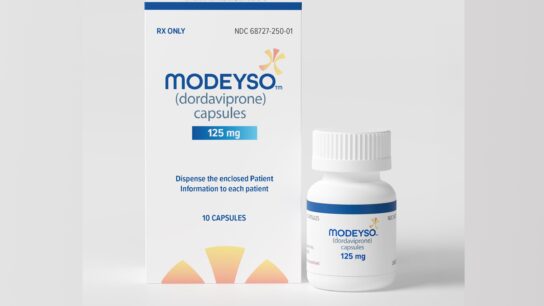
Modeyso is the first FDA-approved treatment for this rare brain tumor.
Researchers conducted a population-based study to estimate survival outcomes across Europe for pediatric CNS tumors.
Researchers examined the possible relationship between air pollution exposure, including UFPs, and tumors of the central nervous system (CNS) in a cohort study including all Danish adults aged 20 years and older identified from nationwide registries since 1991.
TLX101-CDx is an investigational positron emission tomography agent that targets the membrane transport proteins, LAT1 and LAT2.
Researchers evaluated the evidence for a causal relationship between exposure to radiofrequency electromagnetic fields and risk for neoplastic diseases.
Researchers aimed to compare lobectomy vs other management strategies for glioblastoma in terms of overall and progression-free survival.
In a prospective longitudinal trial, researchers assessed the association between academic readiness and outcomes in patients who received brain tumor treatment in early childhood.
The CBTRUS Statistical Report aims to describe the epidemiology of primary brain tumors in adolescents and young adults in the US between 2016 and 2020.
Researchers explored whether the risk for brain tumors is associated with the prolonged use of certain hormone therapies.
Researchers assessed whether adding marizomib to standard temozolomide-based radio-chemotherapy improved overall survival in patients with glioblastoma.
Researchers sought to assess whether a daily dose of 40-mg vorasidenib would improve progression-free survival and delay the initiation of further anticancer therapy among patients with grade 2 IDH-mutant glioma.
Image-guided dose escalation of radiotherapy does not improve outcomes in patients with glioblastoma receiving concomitant temozolomide, a phase 3 trial suggests.
Researchers estimated the diagnostic accuracy of circumpapillary RNFL and GCL-IPL thickness to objectively measure abnormal visual function in children with newly diagnosed brain tumors.
Researchers evaluated the efficacy and safety of disulfiram and copper as add-on alkylating chemotherapy in patients with recurrent glioblastoma.
UK investigators examined the experience of organ donation from deceased donors with brain cancer, including potential risks and benefits.
The risk for cancer transmission in transplants from deceased donors with primary brain tumors had been observed as low.
Using data from the European EPI-CT study, researchers assessed the risk for brain cancer among children and young adults who underwent CT scans in childhood.
In preclinical studies, WP1122 has shown to increase cellular uptake of 2-DG, increase drug half-life, and increase the ability to cross the blood brain barrier.
In a prospective cohort study, researchers assessed the likelihood and types of abnormal ophthalmologic findings in youths with a newly diagnosed brain tumor.
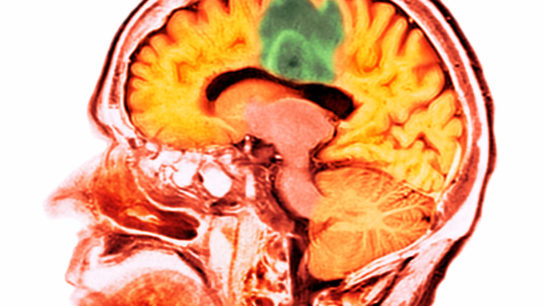
Overall and progression-free survival were superior with temozolomide.
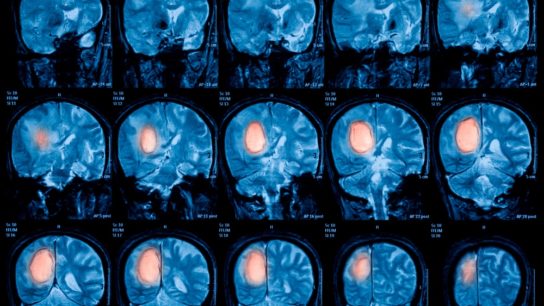
Researchers sought to develop and validate an MRI radiomics prediction model through a machine learning-based method to predict the survival of patients with glioma.
Researchers sought to evaluate the activity and safety of dabrafenib plus trametinib in adult patients with recurrent or progressive BRAF V600E -mutation–positive high-grade and low-grade glioma.
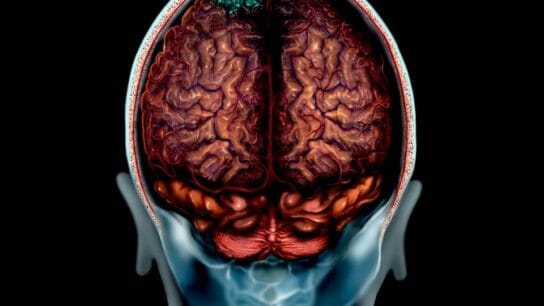
The researchers sought to assess the safety and efficacy of cabozantinib to treat brain metastases in patients with metastatic renal cell carcinoma.
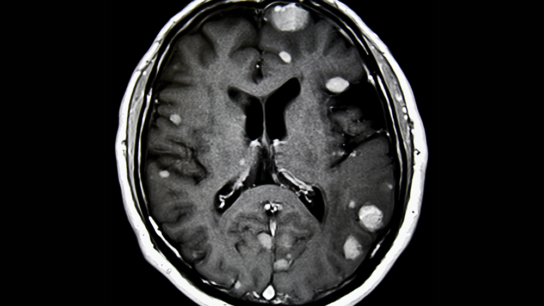
From 2008 to 2017, the incidence of malignant brain tumors decreased for all ages combined, but increased among children and adolescents.

Researchers applied a machine learning strategy in a longitudinal analysis of clinical features linked to neurofibromatosis type 1 in pediatric patients.
Surgical treatment of intracranial meningioma (IM) should be considered even in patients over the age of 80 years.

The maker of the expensive brain cancer drug Gleostine has removed it from the Medicare drug rebate program.
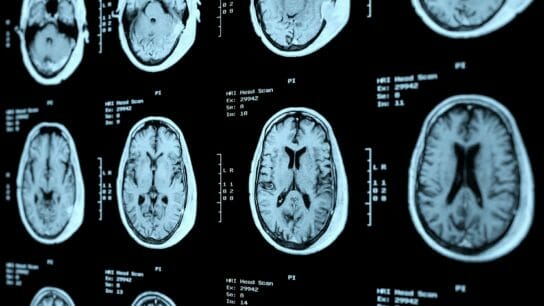
The combination of nivolumab with ipilimumab is an effective treatment option for patients with advanced melanoma with asymptomatic brain metastases

Occult brain metastasis is identified in about 4 percent of patients with metastatic renal cell carcinoma (mRCC).


