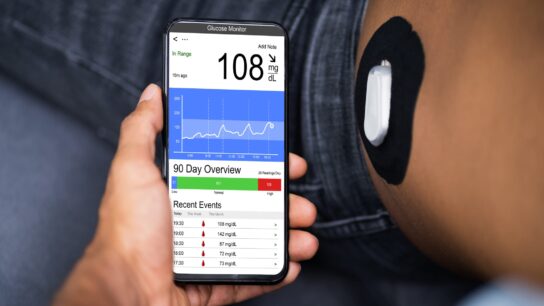
While HIPAA rules protect health information of patients in hospitals and for physician visits, generally they do not protect the privacy or security of a patient’s health and wellness information when it is created accessed through or stored on personal cell phones or tablets, or fitness trackers.

Features
Drs Lucke-Wolde and Sun discuss the incidence of and risk factors for pediatric stroke, as well as advances and remaining gaps in the field.
As gestational diabetes becomes more common, it is important for physicians to consider its long-term effect on health, including cardiovascular health.
The American Academy of Sleep Medicine published guidance regarding the treatment of restless leg syndrome and periodic limb movement disorder.
This Domestic Violence Awareness Month, Psychiatry Advisor spoke with Allison Paugh to discuss best practices when encountering cases of suspected IPV during teletherapy.
This patient fact sheet describes the medications that are known to induce tardive dyskinesia, its symptoms, and ways in which the disease state may be managed.
Prescription digital therapeutics represent the evolving intersection of technology and mental health care – but how do clinicians feel about this new era?
Ravi B Parikh, MD, MPP discusses the current and future use of artificial intelligence (AI) in the greater US health care system.
Leaders who recognize the humanity in their employees can earn exceptional engagement and unwavering loyalty.
Drs Bruneau, Tang, and Hofman discuss barriers to health care faced by patients with Alzheimer disease (AD), as well as intervention methods that may help address health disparities in AD.
Susan C Winckler, CEO of the Reagan-Udall Foundation, helps shed light on how the Chevron ruling may affect practicing physicians.
We’ve developed a comprehensive patient fact sheet on the defining symptoms of delirium and dementia and ways in which the 2 disease states can be differentially diagnosed.
Psychiatry Advisor spoke with Michelle Lewis to discuss how color psychology can play an important role in the design of health care spaces and physician branding.
The ICHOM developed an international consensus on standard outcome measures for the treatment of neurodevelopmental disorders.
Jacqueline French, MD, highlights the treatment gap that exists among adolescents with nonmotor seizures that are often missed or misdiagnosed in emergency departments.
Bryan Kuderna, a certified financial planner, examines the prospect of medical school debt forgiveness and outlines loan repayment plans available to US physicians.
Neurology Advisor explored the controversial approval process of aducanumab for Alzheimer disease and the effects it had on public trust in the US Food and Drug Administration.
The Council of Autism Service Providers has updated the applied behavior analysis practice guidelines for the treatment of autism spectrum disorder.
Dr Paulson, a neurology professor and director of the Alzheimer Center at the University of Michigan Medical School, provides insights into frontotemporal dementia and aphasia.
Adolescent substance use is a major public health problem – could child psychiatry access programs provide a solution?
Researchers developed an updated practice guideline to advise clinicians on the proper selection of antiseizure medication in people with epilepsy of childbearing potential.
Clinical trial investigators explore the headway made by diversity, equity, and inclusion initiatives in clinical trials of Alzheimer disease and related dementias and the challenges that still persist.
Hallucinogens are being evaluated in Phase 2 and Phase 3 clinical trials for their therapeutic potential to treat a wide variety of mental health disorders.
Drs Nicholas Beimer and Patience White discuss the structural and psychosocial barriers that make it difficult for adolescents living with epilepsy to navigate the transition from pediatric to adult care.
We’ve developed a comprehensive fact sheet on the side effects, drug interactions, and cost savings of Nurtec ODT for migraine for clinicians to share with their patients.
Neurology Advisor surveyed and interviewed physicians in the United States to better understand the incidence of burnout and how self care activities can provide relief.
Wildfire smoke health effects, including cardiovascular disease, are in need of further study as climate change intensifies.
Bruce H. Cohen, MD, and Amy K. Guzik, MD, explain the importance of Neurology on the Hill and how it helps neurologists better improve clinical care by advocating for their patients.
Diagnosing patients with neurologic Lyme disease can take upwards of 2 years, which Maria Arini Lopez discovered first-hand in the spring of 2021.
Some individuals with ASD learn to use certain behaviors to minimize or conceal their symptoms so they can be perceived as neurotypical. The term “masking” (also referred to as “camouflaging”) is used to describe these coping strategies.